
Ansul system
An Ansul system is a fire-stopping system built into the vent hood over a restaurant stove, and if grease catches fire, it sprays a wet chemical liquid that puts the fire out. ANSUL is a brand owned by Johnson Controls, and its restaurant model, the R-102, is the system owners often ask for by name.
NFPA 96 sets the service schedule. Your local fire marshal, the official who enforces the fire code, checks it and can add rules.
- Inspection at least every 6 months
- Inspection cost at a small restaurant $300 to $600
- System price with one installer From $3,400
- Required on Every Type I hood
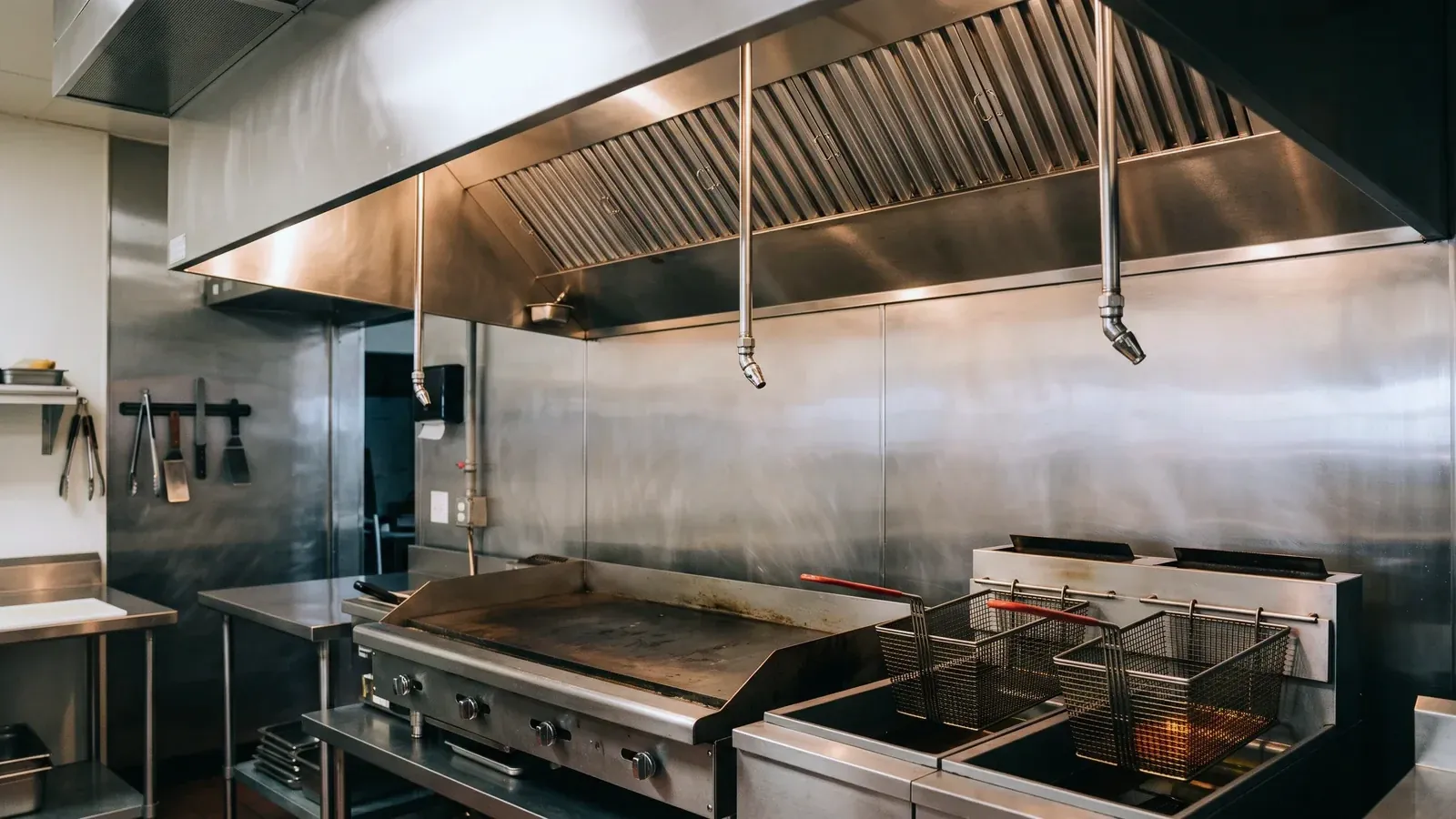
Ansul system basics
For over a century, ANSUL has worked in fire protection. The company was founded in 1915 and is based in Marinette, Wisconsin.
The R-102 covers a wide range of kitchens, from food trucks to hospitals. If you cook under a Type I hood, NFPA 96 requires an automatic fire-extinguishing system.
Kitchen hood fire suppression, start to finish
This setup relies on a wet chemical agent. The agent fights grease and oil fires and cools them to help keep the fire from starting again, according to ANSUL.
- Heat from a fire under the hood warms the air around small metal pieces called fusible links. Each link is a small part made to come apart once the heat goes past a set temperature.
- Once the links pull apart, the system releases.
- The agent sprays over the hot grease and builds a foam-like layer on top of it.
- The system can also tie into your fire alarm, and it can work with an automatic gas shut-off valve that cuts the gas supply to your cooking appliances.
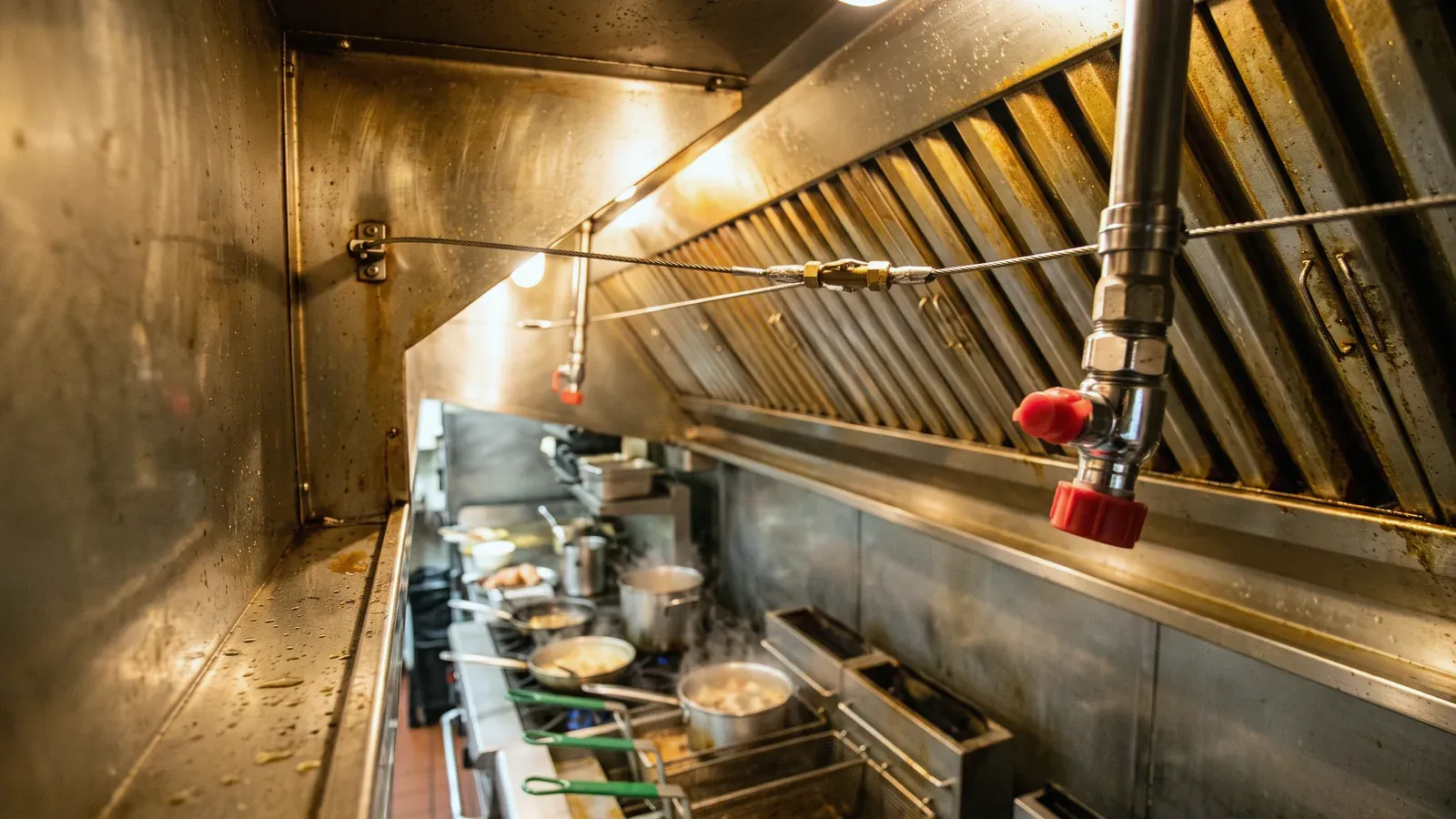
What does NFPA 96 require?
NFPA 96 covers ventilation control and fire protection for commercial cooking. This covers any cooking that sends grease-laden vapors into the air.
A Type I hood is the hood that sits over grease-producing cooking. NFPA 96 says an automatic fire-extinguishing system is required for every Type I hood.
Since 1994, a safety standard called UL 300 has required kitchen systems to use a wet chemical liquid. Strictly, UL 300 is a fire test, and NFPA 96 asks for systems listed to it; the ones that pass, like the ANSUL R-102, are wet chemical. Older dry powder systems from before that standard don't meet today's rules, so they may need replacing. Your contractor or fire marshal can tell you whether yours does.
How often it gets checked
Under NFPA 96, your system gets inspected at least every 6 months. On each twice-a-year visit, the technician goes over the nozzles, the fusible links, the cartridge, the pull station, and the fuel shutoff.
Here is who does what, and how often:
| Task | How often | Who does it | Standard |
|---|---|---|---|
| Full service of the suppression system | Every 6 months | A trained, factory-authorized technician | NFPA 96 |
| Replace metal fusible links | Every 6 months | The same technician | NFPA 96 |
| Pressure test the wet chemical tanks | Every 12 years | A trained service company | NFPA 17A |
| Check the hood, ducts and fans for grease | Monthly to once a year, by how much you cook | A trained hood cleaning company | NFPA 96 |
The full schedule for every system in the building is on the fire inspection frequency chart, which you can download and print.
Hood and duct cleaning schedule
Cleaning timing for your exhaust setup comes down to what you cook and how much of it you cook. The NFPA 96 intervals look like this:
| Type of kitchen | Cleaning schedule |
|---|---|
| Solid fuel cooking, like wood-fired pizza ovens, charcoal grills, and mesquite broilers | Monthly |
| Busy, high-volume kitchens | Quarterly |
| Steady, moderate-volume kitchens | Every six months |
| Low volume, such as a church kitchen that cooks twice a week | Once a year |
Schedules can shift as your menu changes. If a kitchen cleaned twice a year adds a charbroiler, it moves to cleaning every three months.
Restaurant fire suppression system costs
Going by one installer's pricing, an R-102 system begins at $3,400, with hoods also starting at $3,400. Those are two separate items, so a kitchen that needs a new hood and the system starts near $6,800. What your kitchen ends up paying may run higher. The number of agent tanks your hood line needs moves the price most; longer cooking lines, more appliances and duct changes add to it.
Once the system is installed, service costs keep coming. The numbers below come from one code overview:
| Service | Small restaurant | Large restaurant | Frequency |
|---|---|---|---|
| Suppression system check | $300–$600 | $500–$800 | Every 6 months |
| Cleaning the hood and ducts | $200–$500 | $1,500–$3,000 | Varies with your cooking |
| Recharge after a discharge | $650–$1,300 | $1,000–$2,500 | Per release |
After a discharge: cleanup
Shut off the cooking equipment and leave it off until the system is back in service. Clean up the way the maker of your system's agent says to; Ansul says its residue rinses off with water or steam. After that, the system needs a recharge, which is the price in the cost table's last row. A qualified contractor recharges and resets it before anyone cooks again.
Food truck fire safety
NFPA 96 and NFPA 1 are the main fire-safety standards for food trucks. Their handheld fire extinguishers are chosen and mounted according to a separate standard, NFPA 10.
When your truck runs on propane, give the gas system a visual check every day before each use. Your local fire officials may also inspect your truck and have to approve it before you can operate.
Questions owners ask
Where does the name ANSUL come from?
It comes from anhydrous sulfur dioxide: the "AN" stands for anhydrous, and the "SUL" stands for sulfur.
Who can inspect an Ansul system?
Have the 6 month inspection handled by a technician who is trained and factory-authorized.