
Fire alarm inspection
During a fire alarm inspection, a qualified professional goes through your alarm system and checks and tests each device. NFPA 72, the national code, sets the schedule for how often every part gets looked at, and for a small building the yearly cost usually lands somewhere from $300 to $1,000.
- Every device tested yearly
- Smoke detector look-over every six months
- Who qualifies decided by your local authority
- Yearly cost for a small building $300-$1,000
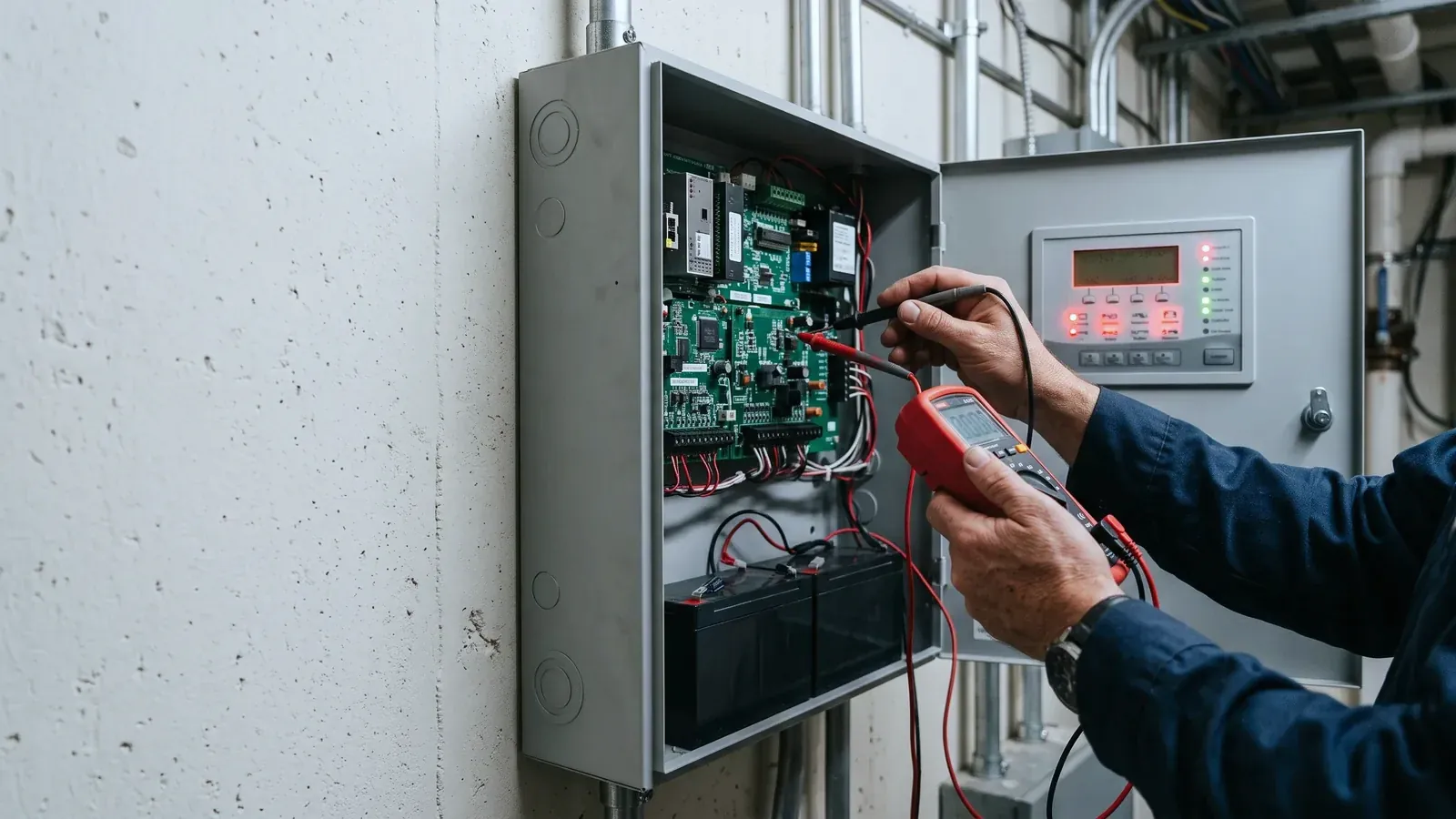
Fire alarm testing
The annual test covers all the devices on the system: the smoke and heat detectors, the pull handles, and the horns and strobes. The pull station is that wall-mounted handle you tug to trigger the alarm.
Smoke detectors get a visual inspection two times a year, plus a working test annually. Sensitivity testing happens 1 year after installation, then every two years, though that interval can stretch out to every 5 years.
Daily checks are a different thing since they're just a visual look. A person takes a quick glance at the control panel to make sure no trouble or supervisory signals are showing.
NFPA 72 and what it covers
The national fire alarm code is NFPA 72. Inspection, testing, and maintenance all fall under its Chapter 14, which is where the schedule above comes from. This NFPA post on smoke detector upkeep goes into more detail on that side of things.
On top of that, the code requires that whoever performs the work be qualified under the authority having jurisdiction. That means the local office, frequently the fire marshal, which determines which rules your building must follow.
Who is allowed to do this work?
There are a few ways someone can become qualified: training by the manufacturer, a nationally recognized credential, a license, or a job with a listed company. Which of these your local authority accepts is up to them, so check with them before hiring anyone.
One widely held credential is the NICET certification for inspecting and testing fire alarm systems. Holders must recertify with NICET every 3 years.
Fire alarm inspection cost
What you pay comes down mainly to how big the building is and how many devices it has. The numbers below are yearly figures from one contractor cost guide.
| Size of the building | Number of devices | Yearly cost | Cost for each device |
|---|---|---|---|
| Less than 5,000 sq ft | 25 to 50 | $300 to $1,000 | $12 to $20 |
| Between 5,000 and 15,000 sq ft | 50 to 150 | $1,000 to $3,500 | $15 to $23 |
| Between 15,000 and 50,000 sq ft | 150 to 500 | $3,500 to $8,000 | $18 to $25 |
Ceilings that are high can push the price up. A lift rental to get to the detectors costs roughly $600 a day.
False alarms that keep happening can hit your wallet too, since fines run $100 to $500 each time.
A ground fault on your panel
A ground fault on the panel means some wire or component is making contact with something it shouldn't, like conduit or the building's steel. You'll see it show up as a trouble signal.
Typical culprits include damaged insulation, wires that got pinched, or moisture. Getting it checked soon is smart, since a second ground fault on a different circuit could short the whole system out.
Frequently asked questions
Do fire departments handle fire alarm inspections?
Nothing here says fire departments handle the testing. What it does say is that whoever does the work has to be qualified under your local authority, so check with that office about who they'll accept.
How often should a fire alarm be tested?
Every part follows its own timeline. The panel gets a daily glance, smoke detectors get inspected twice yearly, and all devices are tested annually.
What's the right way to test a fire alarm?
Under the code, the yearly method is testing each device one by one: the smoke and heat detectors, the pull handles, and the horns and strobes. This should be done by a qualified person, since the daily panel glance is only a check, not a real test.
Who is allowed to test a fire alarm?
Someone your local authority accepts as qualified, for example, a person with manufacturer training, a national credential, a license, or a job at a listed company.