
Fire marshal inspection
A fire marshal inspection means an inspector comes to your building, walks through it, checks it against the fire code, and hands you a list of anything that needs work. If a notice letter just showed up, you still have time to sort out the common problems before the visit, so call now to book any alarm, sprinkler, or kitchen hood testing while there is time to get the records in place.
- In Portland, routine checks happen every 2 years for commercial properties and apartment buildings with 3 or more units
- After a Portland notice letter, you have at least 10 days to take care of common problems
- Hillsborough County routine fee: buildings up to 5,000 sq ft pay $55
- Hillsborough County first reinspection: free of charge
Inspection due, or did you fail one?
The call goes to a fire protection contractor who serves your area. Calls may be recorded.
- routine visit for businesses in Portland, Oregon Every 2 years
- at least, to fix common problems after Portland's notice letter 10 days
- routine fee up to 5,000 sq ft in Hillsborough County, Florida $55
The notice letter that arrives first
In Portland, Oregon, the fire bureau sends a letter to each building ahead of its routine inspection. That letter spells out the violations inspectors run into most. You get at least 10 days to deal with those problems on your own, and the visit itself comes with a fee from the bureau.
Say a restaurant owner opens a letter saying the fire marshal is coming next month. A month is plenty for most items on the list. It may not be enough when the alarm, sprinkler, or kitchen hood system is due for testing and the paperwork isn't in place. Calling now means that testing gets scheduled while time is still on your side.
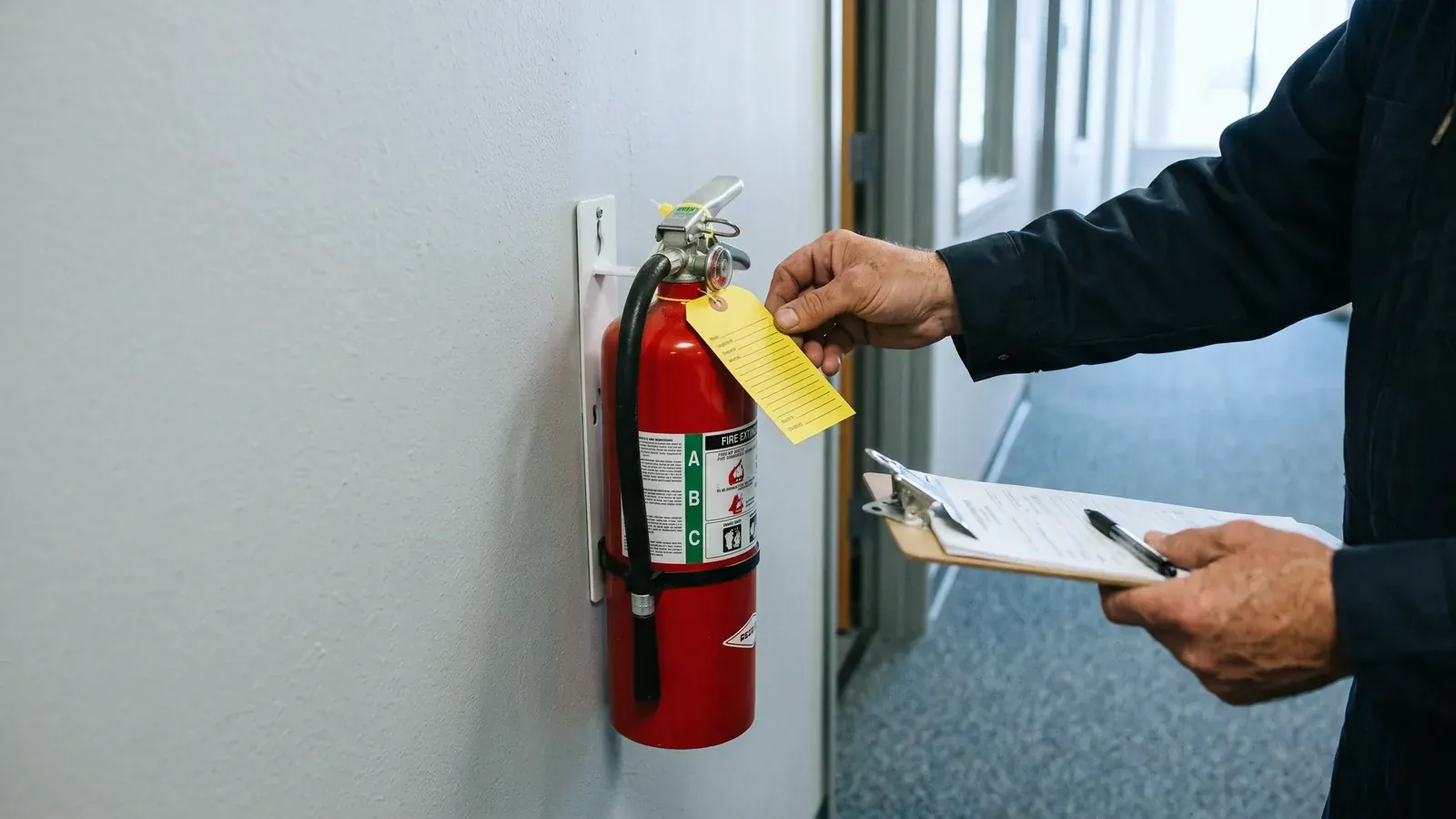
Fire marshal inspection checklist
Plenty of fire marshal offices share the list they use. The items below are drawn from the checklist published by the fire marshal in New Milford, Connecticut.
Exits and lighting
- Nothing blocks the exits.
- While anyone is inside, exit doors stay unlocked, with no deadbolts or padlocks and just 1 lock per door.
- Exit signs stay lit around the clock.
- Emergency lights get a 30-second test monthly and a 90-minute test yearly.
Fire extinguishers
- Every extinguisher is checked monthly and serviced yearly.
- Each one sits in plain sight, mounted on a wall close to an exit.
Electrical
- Fixed wiring does the job, not extension cords.
- No surge protector is plugged into another surge protector.
- Each electrical panel has 36 inches of open space in front of it.
- All circuits are labeled.
Fire alarm and sprinklers
- The alarm gets a yearly test under NFPA 72. NFPA is the group behind the national fire safety standards used by most fire codes.
- Sprinklers get a yearly test under NFPA 25.
- Keep storage at least 18 inches away from every sprinkler head.
- Test records stay on site where the fire marshal can review them.
Commercial kitchens
- The paperwork shows hood and duct cleaning every 6 months under NFPA 96.
- The kitchen fire suppression system is tested and serviced under NFPA 17A. That's the built-in setup above the cooking line, the one that releases a chemical agent to smother a grease fire.
- A Class K extinguisher, made for cooking oil fires, sits in the kitchen.
You can handle most of this yourself, things like shifting boxes or putting in a new bulb. But if the paperwork for your alarm, sprinkler, or kitchen suppression testing is missing, the only fix is having that work done, so booking those tests with a quick call is a smart move.
What to expect during a fire safety inspection
The inspector goes through your building and works down the checklist: exits, lighting, extinguishers, wiring, and building systems. They'll also want to see your test and service records. Afterward, you receive a list of whatever falls short of the code.
Who shows up depends on your location. Texas's State Fire Marshal's Office asks you to start with your local inspection authority. Requests from areas that already have their own certified inspectors get canceled, and only certain people can request an inspection from the state.
Reinspection fees by building size
When the inspector finds problems, they return to confirm you've fixed them. Some places charge for those follow-up visits. Hillsborough County, Florida sets its fees by building size, and each extra trip costs more.
| Building size | Routine visit | First recheck | Second recheck | Third recheck |
|---|---|---|---|---|
| 5,000 sq ft or less | $55 | Free | $82.50 | $165 |
| 5,001 to 15,000 sq ft | $75 | Free | $112.50 | $225 |
| 15,001 to 25,000 sq ft | $150 | Free | $225 | $450 |
For a building of 5,001 to 15,000 sq ft, a third reinspection adds $225 on top of the routine fee. Get everything fixed before the first return visit and you pay nothing extra. If the failed item is the alarm or the sprinklers and the repair will take a while, you may need a fire watch until the system works again. A call now means repairs and tests are finished before the inspector returns.
Questions people ask
Does the fire marshal do inspections?
Yes. In Portland, routine checks cover commercial properties and apartment buildings with 3 or more units on a 2-year cycle. The Texas State Fire Marshal's Office directs you to your local inspection authority, so the visitor may be from your city or county.
Which records should you have ready?
Keep your yearly alarm and sprinkler test reports somewhere you can grab them fast. Running a kitchen? Also gather hood and duct cleaning records covering the last 6 months, plus the suppression system's service record.
What does a fire safety inspection cost?
That varies by location. Portland bills for its routine visits. In Hillsborough County, a routine inspection runs $55, $75, or $150, depending on building size.
How do you get through a fire marshal inspection?
Take the checklist and walk your building soon after the notice lands, while you still have days to work with. Handle the simple fixes yourself, and schedule any system testing right away so the records are in hand on inspection day.