
Fire extinguisher inspection
Fire extinguisher inspection comes down to two jobs: a quick monthly check you can handle on your own, plus a yearly visit from a certified technician.
- Monthly check: anyone can do it, no certification required
- Yearly service: a certified person does it and tags every extinguisher
- Records of monthly checks: hold on to them for at least 12 months
- One company's price list charges $4.95 per extinguisher for yearly service
- quick check that anyone who knows what to look for can do Monthly
- maintenance by a certified person, with a tag on each unit Yearly
- per unit for yearly service on one company's price list $4.95
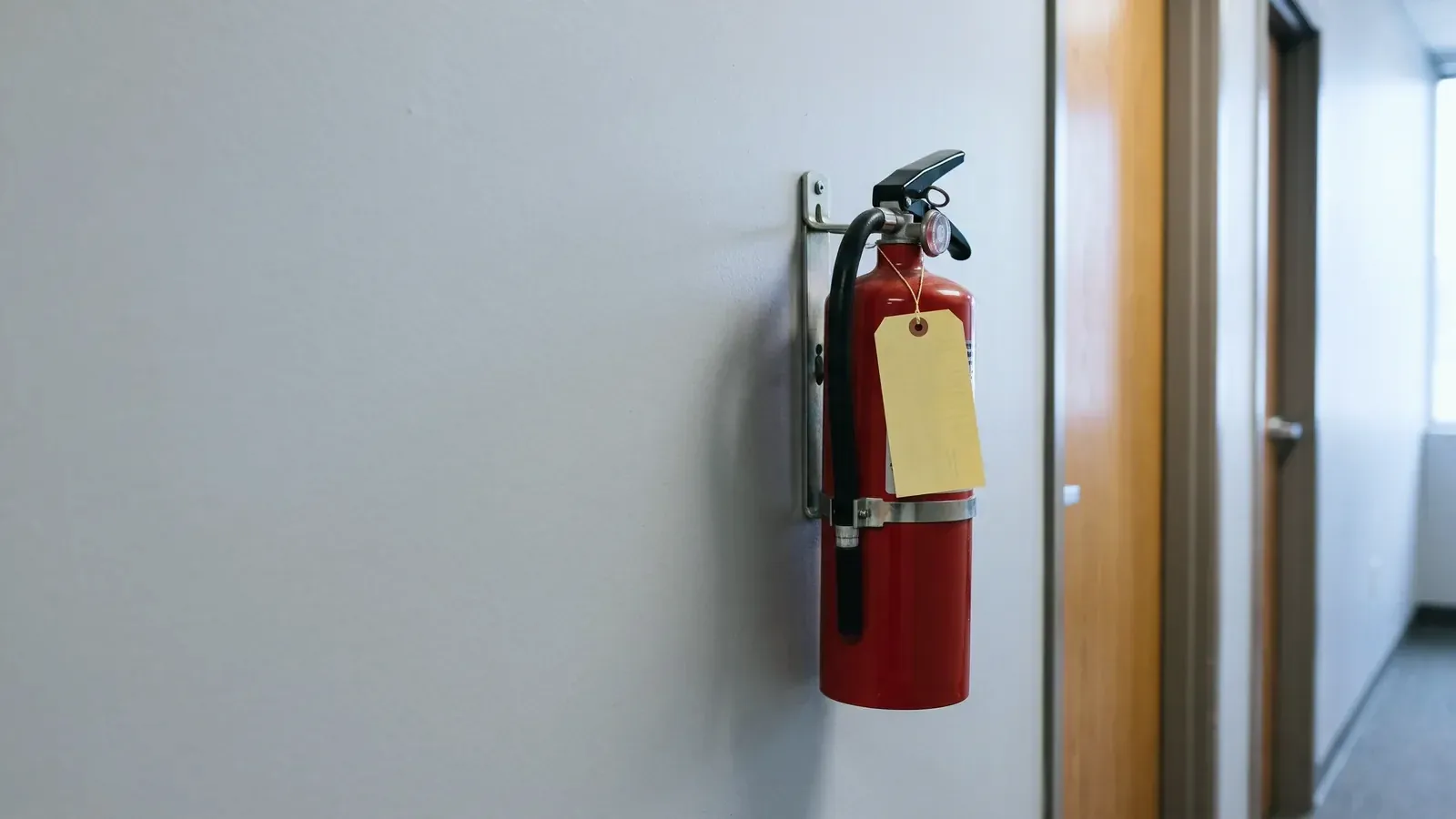
Monthly checks under NFPA 10
The national standard for portable fire extinguishers is NFPA 10. It says each extinguisher gets inspected at installation and then monthly after that.
Once a month, go around to each extinguisher and look at these 4 things:
- It sits in its assigned spot.
- It's visible, or a sign points to it.
- The pressure gauge shows the extinguisher has enough pressure to work.
- It's full. You can check by lifting it or putting it on a scale.
Note down every check as you go. You can mark a tag or label on the unit, or keep a log on paper or a computer. Keep those records for 12 months or more.
Can you do the monthly check yourself?
Yes. For the monthly check, NFPA 10 doesn't require certification, so you or a staff member can take care of it. The annual service is another matter, since that one calls for a certified person.
Yearly fire extinguisher service
Once a year, a certified technician needs to service each extinguisher. Certified means they passed a test that your local fire authority accepts.
After finishing, the technician attaches a maintenance tag to each unit.
Internal examinations and pressure testing
Certain extinguishers need more than an annual visit. During an internal examination, the unit gets opened up and inspected from the inside. Depending on the type, this happens every 1 to 6 years. The common stored-pressure dry chemical kind needs one every 6 years.
With a hydrostatic test, the shell gets filled with water under pressure. A shell that fails is condemned, which means it can't be used again. Depending on the type, this test happens every 5 or 12 years, per OSHA's L-1 table.
| Extinguisher type | Hydrostatic test |
|---|---|
| Carbon dioxide (CO2) | 5-year cycle |
| Stored pressure water or wetting agent | 5-year cycle |
| Foam (AFFF) and loaded stream | 5-year cycle |
| Dry chemical with a stainless steel shell | Once every 5 years |
| Stored pressure dry chemical | Once every 12 years |
A NIST summary of NFPA 10 says nonrechargeable extinguishers are taken out of service at 12 years.
What do inspection and service cost?
Prices vary. Safety Flare is one company that posts this price list:
| Service | Price per extinguisher |
|---|---|
| Annual service | $4.95 |
| 6-year maintenance | $5.00 |
| 12-year hydrostatic test | $10.50, plus a refill |
| CO2 5-year hydrostatic test | $36.50 |
A cost page from an extinguisher seller shows inspections running $40 to $100 based on business size. When comparing companies, ask each one for a full quote.
Say you manage an office with 12 extinguishers, and their tags show a year has passed. At Safety Flare's rate of $4.95 each, yearly service is due for all 12, not counting any recharges or tests that are due.
OSHA rules for workplaces
If you provide extinguishers for your employees to use, the U.S. workplace safety rule OSHA 1910.157 applies. It requires a visual inspection each month plus a maintenance check each year.
The rule also caps how far a person may need to walk to get to an extinguisher:
- Class A fires (ordinary materials like wood and paper): no more than 75 feet
- Class B fires (flammable liquids like gas and oil): no more than 50 feet
OSHA says to pick and position extinguishers based on the fire class and the hazard.
Frequently asked questions
What's the cost to recharge a fire extinguisher?
That seller's cost page puts recharges at $25 to $50. Safety Flare's list charges $12.50 for a 5-pound and $14.50 for a 10-pound ABC extinguisher recharge.
How long should I keep the annual service record?
OSHA says to keep the annual maintenance record for one year after the last entry.
Do dry chemical units need attention between 12-year tests?
They do. Per OSHA, dry chemical extinguishers with a 12-year test cycle need to be emptied and serviced every 6 years.