
Alabama fire code
Alabama's building fire code is the 2021 International Fire Code, adopted under Regulation 101 by the State Fire Marshal. Not sure which rules apply to your building? Call today to work out what your building needs.
Have a question about a house? In Alabama, a house, duplex or townhouse follows the state residential code. That is the 2015 IRC with Alabama changes, not this fire code. See which rules cover a house.
- state fire code edition under Regulation 101 2021 International Fire Code
- date the 2021 IFC took effect January 1, 2023
- office under the Department of Insurance State Fire Marshal
- staff certification required for fire alarm contractors NICET Level III
Alabama State Fire Marshal rules
Under Rule 482-2-101-.02, the State Fire Marshal's office put the 2021 International Fire Code into effect. Part 2 of Chapter 1, covering administration and enforcement, was not adopted. It replaced the older 2013 National Fire Codes, retired on January 1, 2023.
The edition that applies to your project comes down to the date of your architectural services contract. That's the date the rule checks against. For a specific project, you can request that the State Fire Marshal approve a newer edition from the International Code Council. Each request is decided by the Marshal.
Appendix D's Section D107 was not adopted, though the State Fire Marshal does recommend it. Want to view the adopted codes online? Reach out to the State Fire Marshal's office. Paper copies cost a fee per page.
Alabama keeps its fire rules in a few separate regulations. Here's what each one covers:
| Rule | Code section | Covers |
|---|---|---|
| 101 | 482-2-101 | Building and fire codes |
| 103 | 482-2-103 | Sprinkler rules |
| 108 | 482-2-108 | Alarm permit fees; an updated version takes effect at the start of 2027 |
| 109 | 482-2-109 | Gas, mechanical, and existing-building codes |
| 112 | 482-2-112 | Fire reports sent to the State Fire Marshal |
You'll find every one of these listed on the State Fire Marshal's regulations page. The adopting rule is published on its own.
Fire alarm contractors and permits
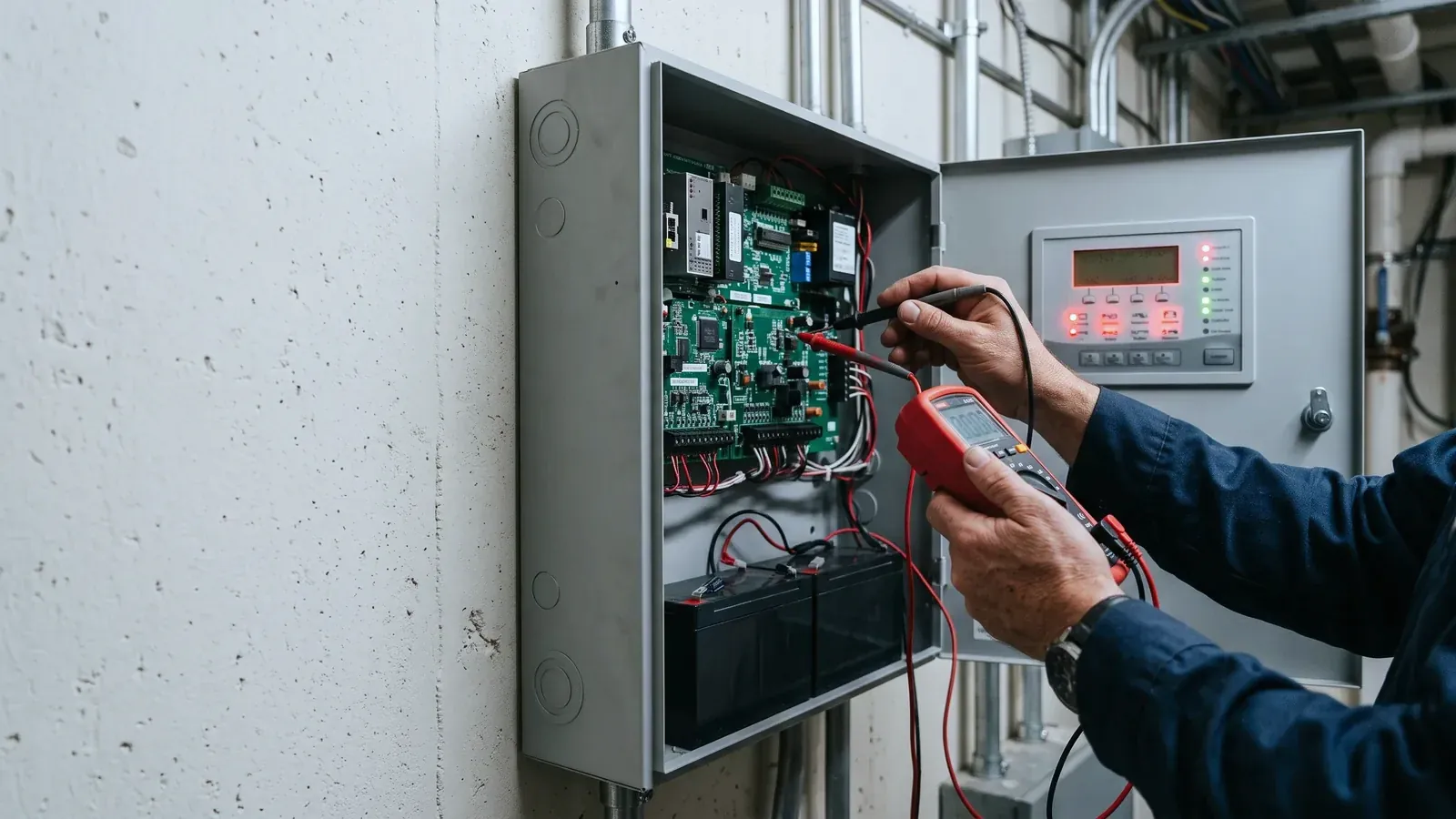
To be certified, alarm companies need a State Fire Marshal permit, plus a NICET Level III holder working for them. NICET is a nationwide credential for fire alarm technicians. Permits are issued in the contractor's name, with the certificate holder listed on them.
These rules apply to people who install, repair, alter, expand, maintain, or inspect fire alarms. Any alarm put in after August 1, 2009 has to meet the current NFPA 72, the National Fire Alarm Code. It also has to meet local code requirements and be approved by the local authority having jurisdiction, the local office with the final word on your building.
Conduit and wire can be installed by a licensed electrical contractor. What they can't do is handle design, programming, certification, inspection, or testing of the alarm system. The state law makes that boundary plain. Before you hire anyone for alarm work, ask to see their State Fire Marshal permit so you can confirm they meet the state's permit requirement.
Birmingham Fire Prevention Division
Birmingham's Fire Prevention Division writes, adopts, and carries out fire, life safety, and building codes. The work is split among three bureaus, coordinated by the Fire Marshal.
Birmingham's Fire Inspection Bureau inspects facilities throughout the city, except one- and two-family homes. Both new and existing structures are covered. Inspections run on a routine schedule, and they also happen when a complaint comes in.
Matters like installing and removing flammable storage tanks are overseen by Certified Hazardous Materials Specialists. Every fire and explosion in the city is investigated by the Fire Investigations Bureau for origin, cause, and responsibility.
Residents can get smoke alarms from the Public Education Bureau. Groups and businesses can also sign up for fire extinguisher simulator training through the city. If an inspection is on the horizon and you'd like your alarms and sprinklers in shape ahead of time, give us a call.
Getting your building ready
- Call us first to talk through your building's fire alarm and sprinkler needs, including local codes that can add to the state code.
- Have your alarm contractor show you their State Fire Marshal permit and name the NICET Level III holder.
- Look over your fire alarm and sprinkler systems ahead of the routine city inspection, so fixes happen on your timeline.
Other codes and inspection schedules in Alabama
The State Fire Marshal adopts only the IFC. Under Rule 482-2-101-.06, the office can look at the 2021 building, fuel gas, mechanical, existing building and plumbing codes, plus the NFPA codes. But it does not adopt them. State-owned buildings, K-12 schools, hotels and movie theaters work differently. For those, the Division of Construction Management enforces the 2021 International Building Code as the State Building Code.
Alabama adopted the 2021 IFC. It says each fire system must stay in working order and be maintained to its NFPA standard (IFC Section 901.6). A contractor or the fire marshal will use these schedules when checking your building.
| System | Standard | How often |
|---|---|---|
| Fire extinguishers | NFPA 10 | Monthly look, yearly service |
| Sprinklers | NFPA 25 | Gauges every 3 months, heads and pipes yearly, inside of pipes every 5 years |
| Fire alarm | NFPA 72 | Panel and detectors tested once a year |
| Kitchen hood system | NFPA 17A and NFPA 96 | Every 6 months |
| Fire doors | NFPA 80 | Once a year |
The table shows the main check for each system. Each standard lists more tasks. Some parts follow their own schedule. Use the full chart to catch every task.
Print the inspection frequency chart (or get it as a CSV file) and keep it in your files. Have a fire watch log on hand for any day your alarm or sprinkler system is out of service.
Fire rules for a house in Alabama
A house, duplex or townhouse in Alabama is covered by the state residential code, not the fire code above. The version in the state rules is the 2015 International Residential Code with Alabama changes (Rule 305-2-4-.09). That rule does not make sprinklers mandatory in a house or townhouse. If you install them anyway, they must meet NFPA 13D or the plumbing section of the code. Smoke alarms are required: one in each bedroom, one outside each sleeping area and one on every floor.
For a permit or an inspection question, go first to your city or county building department. Since October 1, 2024, the Alabama Home Builders Licensure Board sets which residential code applies statewide (Act 2024-443), so if your town has no building office, ask the board.