
Alaska fire code
Alaska uses the 2021 International Fire Code, plus amendments the Division of Fire and Life Safety has added. For anyone who owns or runs a building, this rulebook governs your inspections, service reports, and permits. Give us a call and an Alaska-based fire protection contractor will walk you through what the code means for your property.
Code in force: 2021 International Fire Code with Alaska amendments. Enforced by: Division of Fire and Life Safety. Your local fire marshal can add rules, so check with that office too.
- base code adopted with state amendments 2021 International Fire Code
- state regulation adopting the code 13 AAC 50.025
- contractors send service reports to fire officials Appendix KK reporting
Asking about a house? For a house or duplex, smoke alarm and sprinkler rules usually come from the residential building code (the IRC) instead, so ask your local building department.
Alaska fire marshal
The Division of Fire and Life Safety, led by the state fire marshal, adopts the fire code and enforces it. The division carries out routine and complaint-driven inspections at commercial and public properties statewide. Building or remodeling? It reviews your construction plans against the code too.
Enforcement can be passed down to a city or borough by the fire marshal. In that case, your local building or fire official serves as the fire code official for the property. That's how Anchorage is set up, and its fire department handles inspections in that area.
Wondering if the state or your city handles your inspections? Call to find out which inspector covers your property.
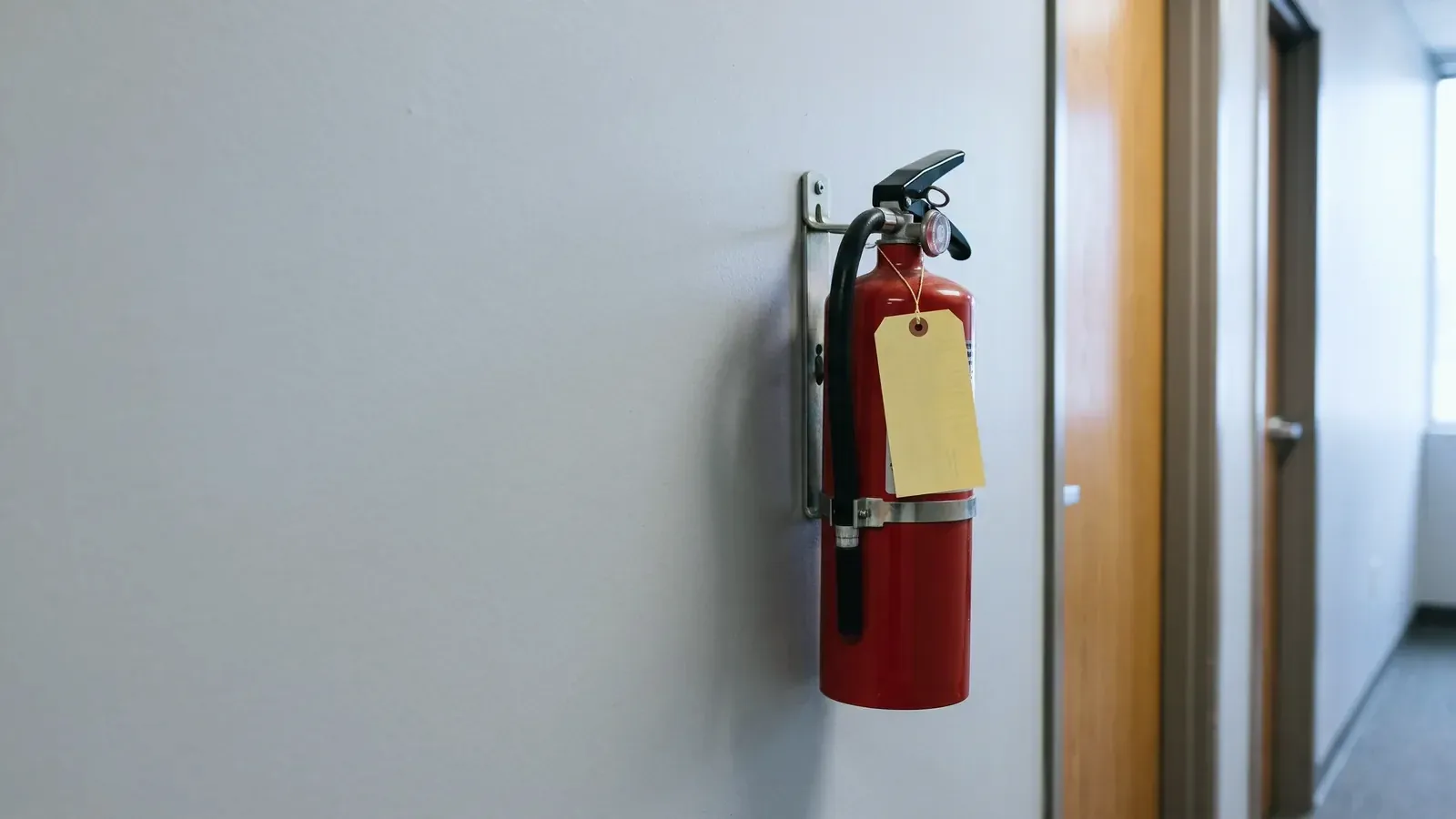
Which edition does Alaska use?
Alaska formally adopts the 2021 International Fire Code under 13 AAC 50.025. It covers all occupancies and buildings, though some chapters are reserved. Fire prevention rules appear across 13 AAC 50 through 13 AAC 55, authorized by AS 18.70.080.
New residential construction must also have carbon monoxide alarms under state law.
Inspection schedules
In Anchorage, commercial, industrial, institutional, and multi-family buildings get inspected on an annual or biennial cycle. Hotels in Anchorage receive an inspection once a year.
| Property or system | Inspection frequency |
|---|---|
| Hotels in Anchorage | Once a year |
| Other Anchorage commercial and multi-family buildings | Yearly or every two years |
| Portable fire extinguishers | Annual inspection, plus a monthly tag check |
With the monthly check, either a trained staff member signs off on the inspection tag or electronic monitoring watches the unit. That training comes from your employer.
Service reports and system problems
Alaska's extra reporting rule is called Appendix KK. Under it, your fire service company has to send every service report it files to the authority having jurisdiction, that's the official responsible for fire code enforcement at your building's location.
When equipment goes down or develops serious issues, the company has to notify that official right away. A failed inspection won't remain private, which is why quick repairs work in your favor.
Contractor permits for work on your building
Any company working on fire alarm or suppression systems needs at least one permit holder in the correct classification. All applications, including extinguisher and fire system permits, are filed online through the state's portal.
- Extinguisher permits: technicians take the ICC/NAFED FK portable fire extinguisher exam.
- Kitchen system permits: certain NICET special hazard certifications are accepted, or the ICC/NAFED FK kitchen exam. NICET is a nationwide program that certifies fire protection technicians.
- Renewal: usually requires 15 documented continuing education units.
- Shop drawings: must carry a stamp from an Alaska registered design professional, or the signature of a permit holder in Alaska's fire systems program.
- Products: all fire protection products need listing from a nationally recognized testing laboratory.
Ask to see a contractor's permit before hiring, and confirm it fits the system you have. Give us a call and we'll connect you with a contractor holding the right permit for the job.
Getting ready for your next inspection
Start by confirming whether your city or the state handles inspections at your property. Next, set up your yearly service with a permitted contractor, and hold onto all your signed tags and service reports so they're on hand when the inspector arrives.