
Connecticut fire code
Which fire code applies in Connecticut comes down to how old your building is, and the first call on whether you meet it belongs to your local fire marshal. Facing an inspection, a plan review or a sprinkler job? Call today to learn which code applies to your building and what to do next.
- Current code: 2022 State Fire Safety Code
- New builds: 2021 International Fire Code
- Older buildings: 2021 NFPA 101
- After receiving plans, your local fire marshal has 30 days to tell the building official whether they substantially comply.
Code in force: 2022 State Fire Safety Code (2021 IFC). Enforced by: DAS Office of the State Fire Marshal. Your local fire marshal can add rules, so check with that office too.
- uses 2021 IFC and 2021 NFPA 101 2022 State Fire Safety Code
- sits in the Department of Administrative Services Office of State Fire Marshal
- local fire marshal inspection schedule by occupancy Every 3 years or annually
- annual sprinkler credentials expiring October 31 F-1 through F-4 licenses
Asking about a house? For a house or duplex, smoke alarm and sprinkler rules usually come from the residential building code (the IRC) instead, so ask your local building department.
Picking the right rulebook for your building
Connecticut runs a 2022 State Fire Safety Code alongside a 2022 State Fire Prevention Code, each with its own amendments and errata. Oversight of the safety code falls under Connecticut General Statutes chapter 541, the state law that governs it.
Buildings permitted on or after Jan 1, 2006 follow the 2021 International Fire Code. Anything permitted before that date follows the 2021 edition of NFPA 101, a nationwide standard for life safety.
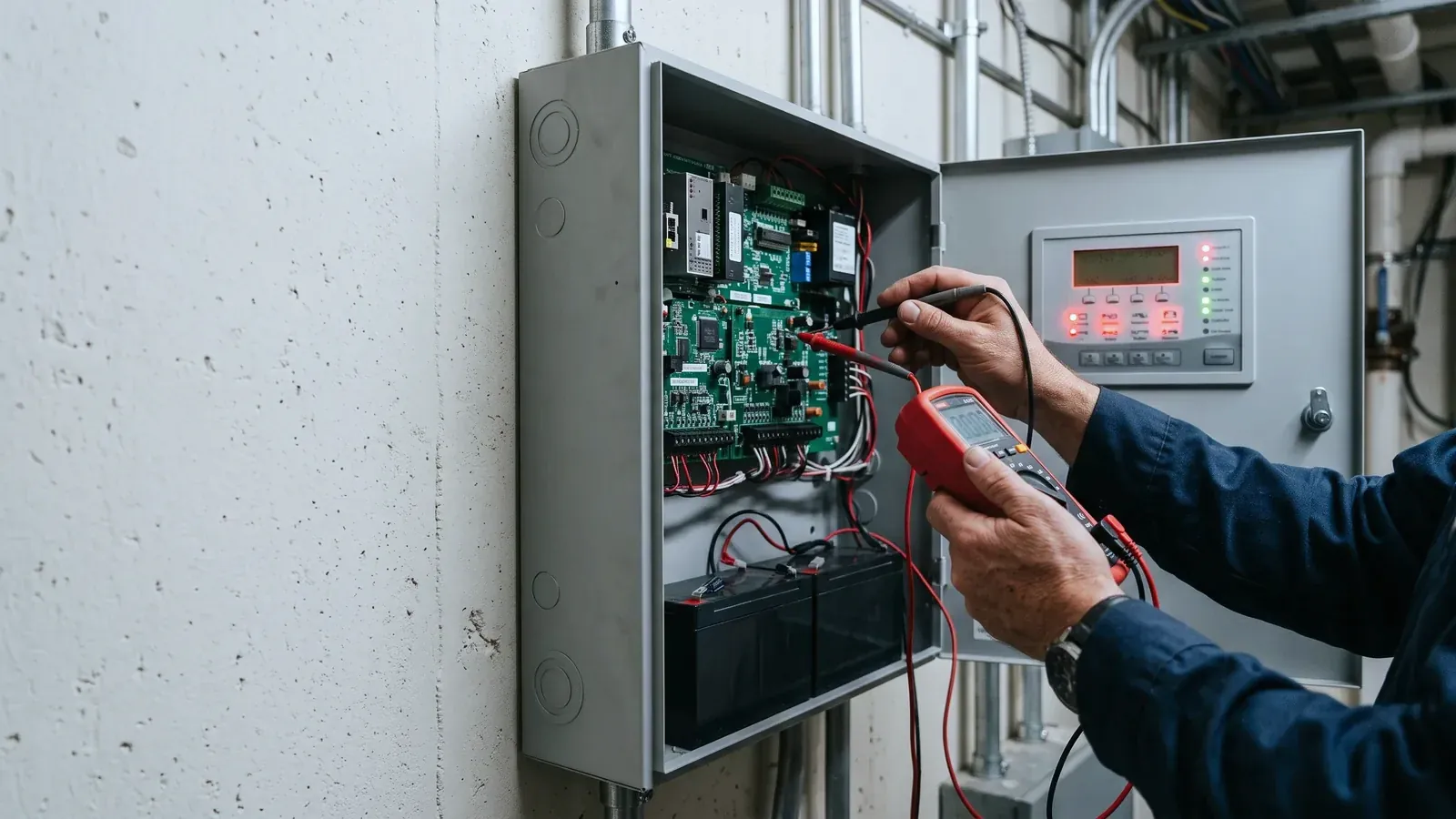
Connecticut fire marshal
The first ruling on your building's compliance comes from your local fire marshal. The State Fire Marshal acts as the authority having jurisdiction, the office in charge of the code, and handles compliance for state-owned property.
That office is part of the Department of Administrative Services. The State Fire Marshal's office reviews requests to modify the State Fire Safety Code. When you disagree with a local ruling, the Codes and Standards Committee hears your appeal.
Following the code to the letter can create genuine hardship at times. When that happens, the State Fire Marshal can approve a variation. Code modification requests are sent by your local authority to DAS.CodeModifications@ct.gov once it has reviewed them.
How often your building is inspected
The schedule depends on what the building is used for.
| Inspection | Types of buildings |
|---|---|
| Once a year | Residential occupancies, plus A-1, A-2, E (schools), H-1, and I-1 |
| On a three-year cycle | B (business), storage class S-1, A-4, A-5, and similar uses |
Unsure where your property fits? Reach out and we'll help you sort it out.
Plans, citations, and keeping exits clear
Your local fire marshal receives the plans. That office then has 30 days to tell the building official whether they substantially comply.
Under CGS 29-291c, citations can be issued for issues like exits that are blocked or fire protection systems that have been turned off.
Connecticut fire sprinkler license
Fire sprinkler work is licensed by the Department of Consumer Protection, and the Fire Protection Sprinkler System Board oversees it. Applications are open to individuals only, never companies. Each applicant sits an exam, and exam vendor fees are paid separately. Connecticut has no reciprocity deals with any other state, which means a license from elsewhere doesn't carry over.
- F-1 Unlimited Contractor: requires a minimum of 2 years working as an F-2 journeyperson, or experience that counts as equivalent.
- F-2 Unlimited Journeyperson: requires a 4-year sprinkler apprenticeship, or experience that counts as equivalent. Anyone holding an F-2 may work only under a licensed contractor.
- F-3 Limited Contractor: covers suppression setups built around foam, water spray, carbon dioxide, dry chemical, halon, and similar liquid or gas agents. It calls for two years spent as an F-4 journeyperson, or the equivalent.
- F-4 Limited Journeyperson: requires a 3-year non-sprinkler apprenticeship, or experience that counts as equivalent.
- F-5 and F-6: cover multipurpose residential sprinkler systems serving one- and two-family houses, along with mobile manufactured homes.
Confirm the person holds the right active license before any work begins. Call now and we'll help you understand which code applies and what to do next.
License fees and when to renew
Every license expires annually.
| License | Application fee | Renewal fee | Renewal due |
|---|---|---|---|
| Contractor (F-1, F-3) | $150 | $150 | October 31 |
| Journeyperson (F-2, F-4) | $90.00 | $120 | October 31 |
| Layout Technician | None listed | $150 | January 31 |
These figures come from the Department of Consumer Protection.