
Delaware fire code
Delaware's current fire code is NFPA 1, Fire Code, 2024 edition, put in place through Regulation 701 with changes made by the state. If your property has alarms, sprinklers, a kitchen hood setup, or extinguishers, this code controls when you're inspected, what you file, and when it's due, so call now to book your licensed inspection and keep your certificate filing inside the 30-day deadline.
Code in force: NFPA 1, 2024 edition with amendments. Enforced by: Delaware Office of the State Fire Marshal. Your local fire marshal can add rules, so check with that office too.
- state fire code under regulation 701 NFPA 1, 2024 edition
- effective date for regulation 701 January 1, 2026
- enforcing office for plans and licenses State Fire Marshal
- deadline to file annual inspection certificate 30 days
Asking about a house? For a house or duplex, smoke alarm and sprinkler rules usually come from the residential building code (the IRC) instead, so ask your local building department.
Regulation 701 and its adopted codes
Regulation 701 became effective January 1, 2026. Through it, Delaware takes on the national fire code along with its own amendments. NFPA means the National Fire Protection Association, the organization behind the national codes that Delaware adapts.
Other national codes come in through Regulation 701 too, each locked to a particular edition. The edition that applies to your building is the one Delaware picked, not the most recent release.
| Code | Covers | Edition in force |
|---|---|---|
| NFPA 1 | Fire Code | 2024 edition |
| NFPA 101 | Life Safety Code | 2024 |
| NFPA 72 | Fire Alarm Code | 2025 |
| NFPA 10 | Fire extinguishers (portable) | 2022 |
Not sure which edition your systems were last inspected to? One call now will get you a straight answer.
Yearly inspections under Delaware's fire prevention regulations
The state's fire rules appear in the Delaware State Fire Prevention Regulations, put out by the Delaware State Fire Prevention Commission in the 700 series. Regulation 703 calls for annual inspection, testing, and maintenance of fire alarms, sprinklers, and other fire protection systems.
Passing isn't the whole job. Your Annual Certificate of Inspection must reach the State Fire Marshal's office no later than 30 days after the work wraps up, which makes the filing date just as important as the test.
If an inspection finds a major deficiency, tell the State Fire Marshal, then send a follow-up once the repair is complete. Bringing in a licensed team fast keeps you inside both deadlines.
Inspection schedules by system
Yearly isn't the rule for everything. Under Regulation 703, each system follows its own timetable.
| System | Service interval | Also required |
|---|---|---|
| Fire alarms, sprinklers, and similar systems | Annually | Certificate due within 30 days |
| Kitchen cooking suppression | Twice a year | Plus after any discharge or failure; swap fusible links annually |
| Standpipes | Five-year cycle | Every 2 years when occupied floors sit over 50 feet above where fire trucks can reach |
| Private dry hydrants | Annually, including reverse flushing | Hold records for 3 years; copy goes to the local Fire Chief |
The standpipe is the piping and hose outlets firefighters hook into inside taller buildings. Portable extinguishers fall under NFPA 10 as Delaware adopted and modified it.
Hotels, motels, dormitories, and apartments must have household fire warning equipment tested by a licensed fire alarm company following NFPA 72. Schedule it alongside your other inspections so everything stays on a single calendar.
Who can inspect your fire protection systems?
In Delaware, only licensed companies and individuals may plan, put in, test, check, and service fire protection equipment and extinguishers. Licenses come from the Office of the State Fire Marshal, which also maintains an up-to-date list of license holders. Technicians qualify by holding the national NICET technician certification and passing an exam on the current state regulations.
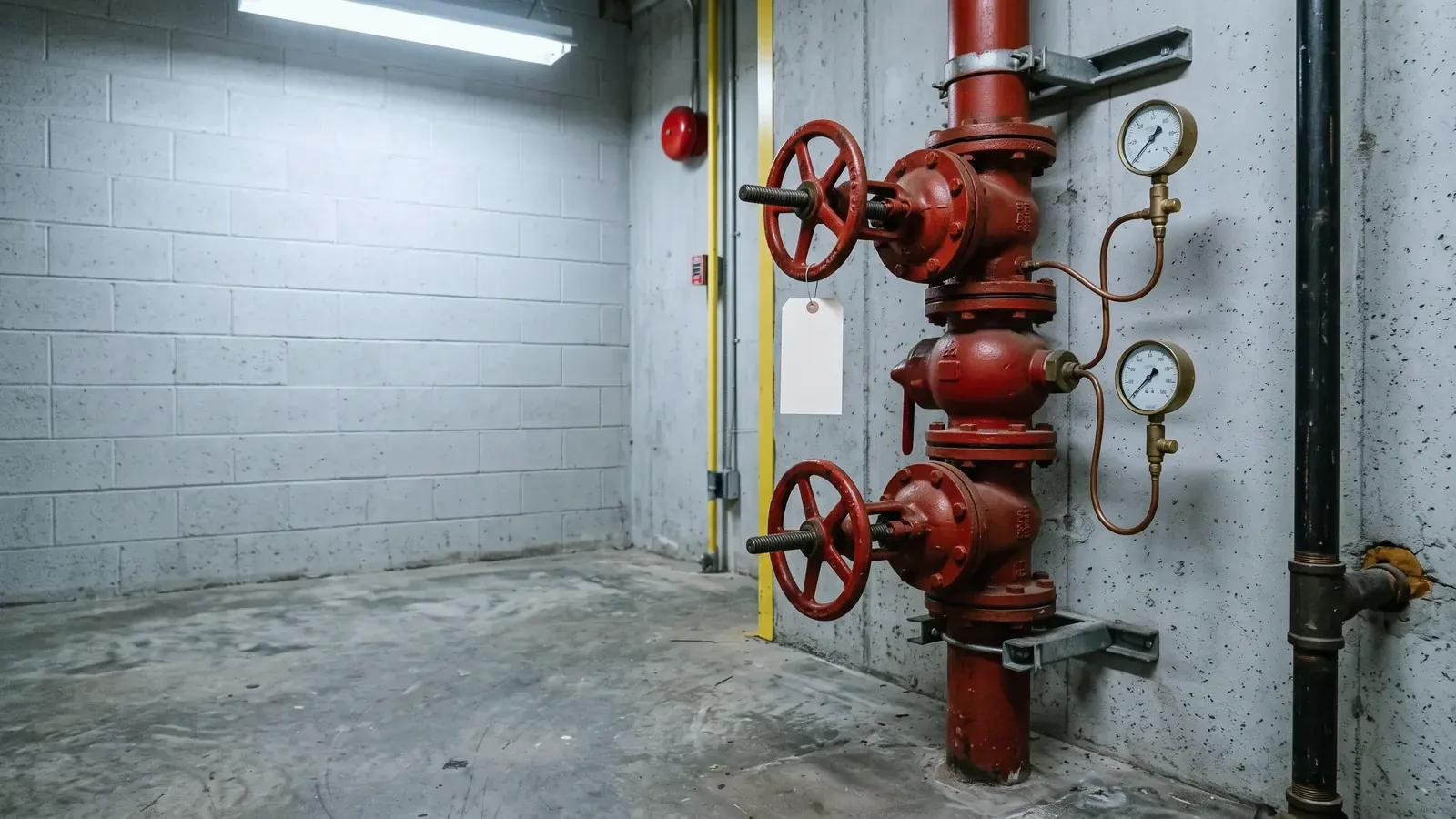
Every inspection ends with a tag on the system's main control. The tag lists where the system is and what kind it is, when the work was done, who the company is (name, address, phone, license number), and the technician's name and certificate number. Missing or expired tag? Call now and get a licensed team out for an inspection.
Taking a system out of service: permit rules
Any time a fire protection system is partly or fully out of service, that counts as an impairment. When a planned impairment runs longer than 8 hours, Regulation 703 says you'll need the State Fire Marshal to issue an impairment permit.
For buildings like hospitals, institutions, assembly spaces, schools, and day cares, a permit is needed for any planned impairment, no matter how brief. Work this rule into your repair plans so you're never unprotected and unpermitted at the same time.
Plans, new systems, and appeals
Delaware's Office of the State Fire Marshal checks the drawings and specs for new construction, additions, and alterations to existing buildings. That review verifies the project complies with the regulations before work proceeds.
New systems also have to pass an acceptance test, meaning a complete working test of the finished system, witnessed by the State Fire Marshal before occupancy. Notice of at least 5 working days is required ahead of the test, so booking late can delay your opening. Talk to a licensed team today and hold your test date.
Disagree with a ruling? The Notice of Appeal form is handled by the Delaware State Fire Prevention Commission.
Buildings in Wilmington
Wilmington runs its own Fire Marshal's Office, known also as the Fire Prevention Division. Working under city codes, it manages fire code adoption, inspections, and fire investigations on behalf of the Fire Chief, with the Deputy Chief of Fire Prevention acting as the city's Fire Marshal.
City investigators may examine how any fire or explosion started and where, anywhere in Wilmington. Fees for the office rose on January 1, 2024, so an older estimate might not reflect current costs.