
Maryland fire code
Maryland's statewide fire code is the Maryland Fire Prevention Code, though your county or city may layer stricter rules over it. Start with your building's address: local fire rules may be stricter than Maryland's state code.
Code in force: Maryland Fire Prevention Code (COMAR 29.06.01). Enforced by: Office of the State Fire Marshal. Your local fire marshal can add rules, so check with that office too.
- statewide fire prevention code rule COMAR 29.06.01
- issues sprinkler and extinguisher contractor licenses State Fire Marshal
- county fire code standard NFPA 1, 2018 edition
- county fire prevention code effective date October 4, 2026
Asking about a house? For a house or duplex, smoke alarm and sprinkler rules usually come from the residential building code (the IRC) instead, so ask your local building department.
Who the state code covers
COMAR stands for the Code of Maryland Regulations, the state's official collection of rules. You'll find the fire code at COMAR 29.06.01, while the Public Safety Article holds the state fire prevention laws in Titles 6 and 9.
Those state laws don't cover Baltimore City. Everywhere else, a local jurisdiction may take up the state code or draft its own. Local rules may be tougher than the state's, never weaker.
Sprinklers in homes and high-rise buildings
Across every Maryland county, each new one- and two-family home has to include residential fire sprinklers. New single-family houses and duplexes both count.
Baltimore County says existing high-rise buildings must have approved automatic sprinkler systems. Own or manage a high-rise without sprinklers? Call the Fire Marshal's Office to find out what your building needs.
Maryland fire sprinkler contractor licenses
If you inspect, test, maintain, install, repair, modify, or lay out sprinkler systems in any Maryland home or commercial property, you need a State Fire Marshal sprinkler contractor license. Working without one is a misdemeanor that can bring up to $1,000 in fines, as much as 10 days in jail, or both.
Every licensed company needs at least one designated qualified person, and the license rests on that person's credentials. That individual must hold either a Maryland PE license or a certificate from NICET, a nationwide program that certifies fire protection technicians in levels. A single person may serve as qualified individual for up to 3 contractors, no more.
A company's license class defines the work it may perform.
| License class | Work allowed | Experience needed | Lowest NICET level |
|---|---|---|---|
| Class I | Inspection, testing, and maintenance | 3 years | Level II |
| Class IIIc | Installation, repair, modification, and layout | 5 years | Level III |
Contractors with licenses must also carry general liability insurance of $1,000,000 or more. Before you hire anyone for sprinkler work, ask which license class they hold and ask to see their State Fire Marshal license.
Getting or renewing a sprinkler license
Contractors do all of this in a OneStop account online.
- Send the $300 application fee; review starts only after payment arrives.
- Include a NICET certificate or Maryland PE license for every qualified individual.
- Add notarized affirmation pages from the applicant and every qualified individual.
- Provide an insurance certificate that names the State Fire Marshal's office as holder and gives 30 days' notice before cancellation.
Licenses run out 2 years after issue. Renew late and you'll owe an extra $300 on top of the renewal fee, while a duplicate or revised certificate runs $25.
Licenses for extinguishers and non-water-based systems
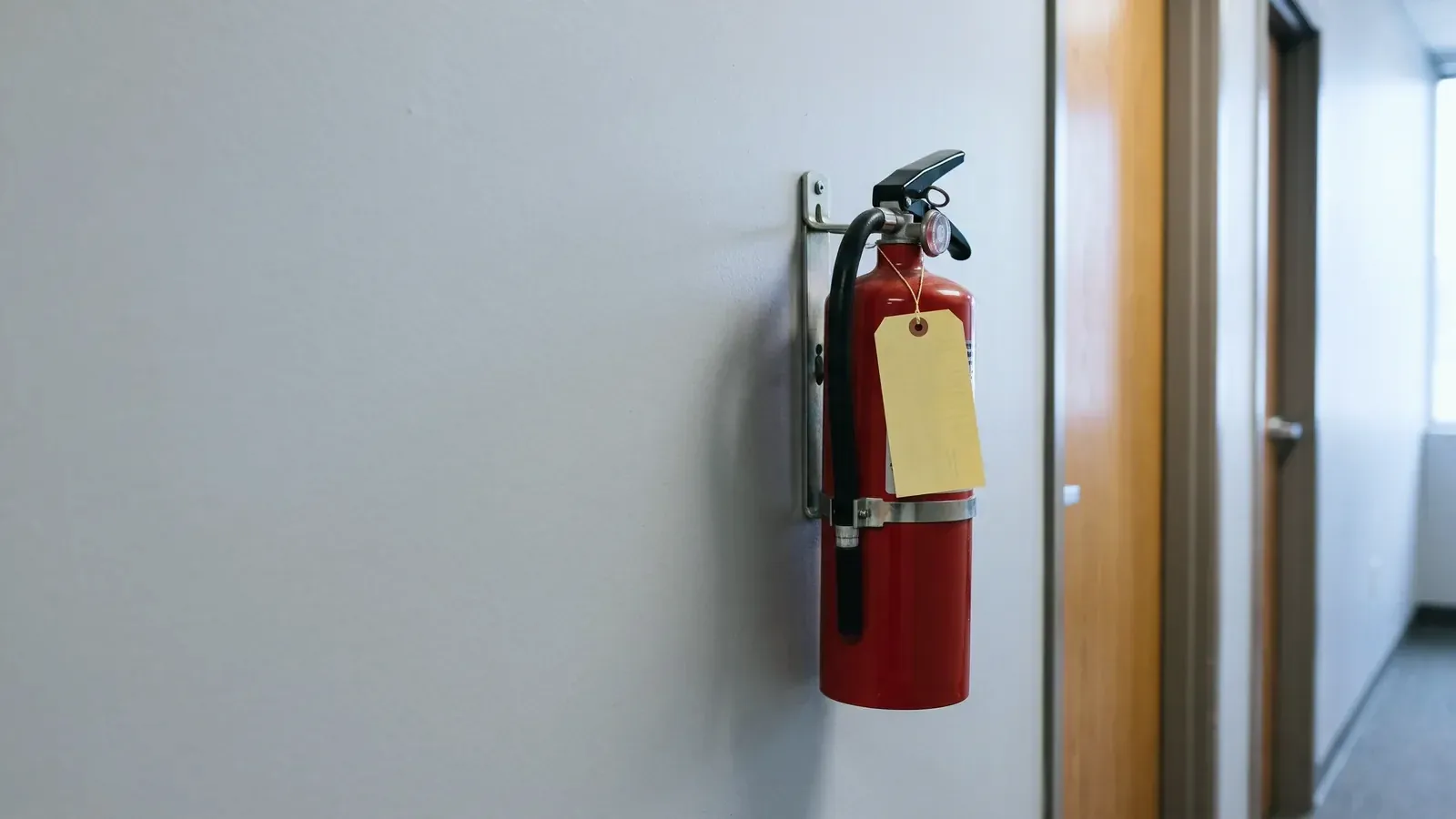
Anyone installing or servicing fire extinguishers or non-water-based suppression systems, whether a company or an individual, needs a State Fire Marshal license. The national standard for portable extinguishers is NFPA 10, and new or expired applicants sit for an in-person written exam built on it. Passing takes a score of 70 percent.
Applicants send in a resume, current training-certificate copies, and a note about whether they plan to do high-pressure testing. Expect final issuance to take about 10 to 30 days.
Fire prevention rules in Baltimore County
The County Fire Department's Fire Marshal's Office enforces the Baltimore County Fire Prevention Code, passed as Bill 14-21. The Baltimore County Fire Prevention Code takes effect October 4, 2026. NFPA is the National Fire Protection Association; the county code adopts two of its standards in their 2018 editions, the NFPA 1 fire code alongside the NFPA 101 life safety code.
Installing fire alarms or sprinklers in Baltimore County requires a permit from Baltimore County's Department of Permits, Approvals and Inspections. Only a registered professional engineer, or a technician holding NICET Level III or above in sprinkler layout, may prepare the sprinkler design. Getting the design right first keeps your permit moving, so call the Fire Marshal's Office before work begins.
County license for servicing extinguishers in Baltimore County
Working on portable extinguishers in the county, whether servicing, repairing, filling, or refilling, requires its own county license, grounded in NFPA 1, Section 13.6. Before applying, new applicants sit for a licensing exam given by the county Fire Marshal's Office.
| Fee | Cost |
|---|---|
| Annual license | $28.00 |
| Renewing late | $42.00 |
Each license year runs January 1 through December 31.