
New Jersey fire code
New Jersey's fire code comes from the 2018 International Fire Code, New Jersey Edition, the state's own version of a national fire code. The state carries it out through its own regulations. Before you book fire protection work, check that the contractor has the qualification New Jersey requires for your equipment.
Code in force: 2018 IFC, New Jersey Edition (N.J.A.C. 5:70). Enforced by: Bureau of Fire Code Enforcement. Your local fire marshal can add rules, so check with that office too.
- state fire prevention code readopted in 2018 2018 IFC, New Jersey Edition
- enforces the state uniform fire code Bureau of Fire Code Enforcement
- required state permit for equipment contractors N.J.A.C. 5:74 certification
Asking about a house? For a house or duplex, smoke alarm and sprinkler rules usually come from the residential building code (the IRC) instead, so ask your local building department.
Which rules cover your building?
New Jersey's fire code is the state-issued 2018 International Fire Code, New Jersey Edition. N.J.A.C. means the New Jersey Administrative Code, the state's official collection of regulations. You'll find the fire code rules in Title 5, Chapters 70 to 76.
For a building owner, a few of those chapters stand out:
- N.J.A.C. 5:70: the state's Fire Prevention Code, readopted with 2018 amendments
- N.J.A.C. 5:71: the rules on enforcement, which were also readopted in 2018
- N.J.A.C. 5:74: certification standard for fire protection equipment contractors, with an amended readoption proposed in 2024
A Division of Fire Safety regulation also calls for 10-year sealed battery smoke alarms. In 2026, the state proposed replacing the certification that fire inspectors and fire officials hold with a state license.
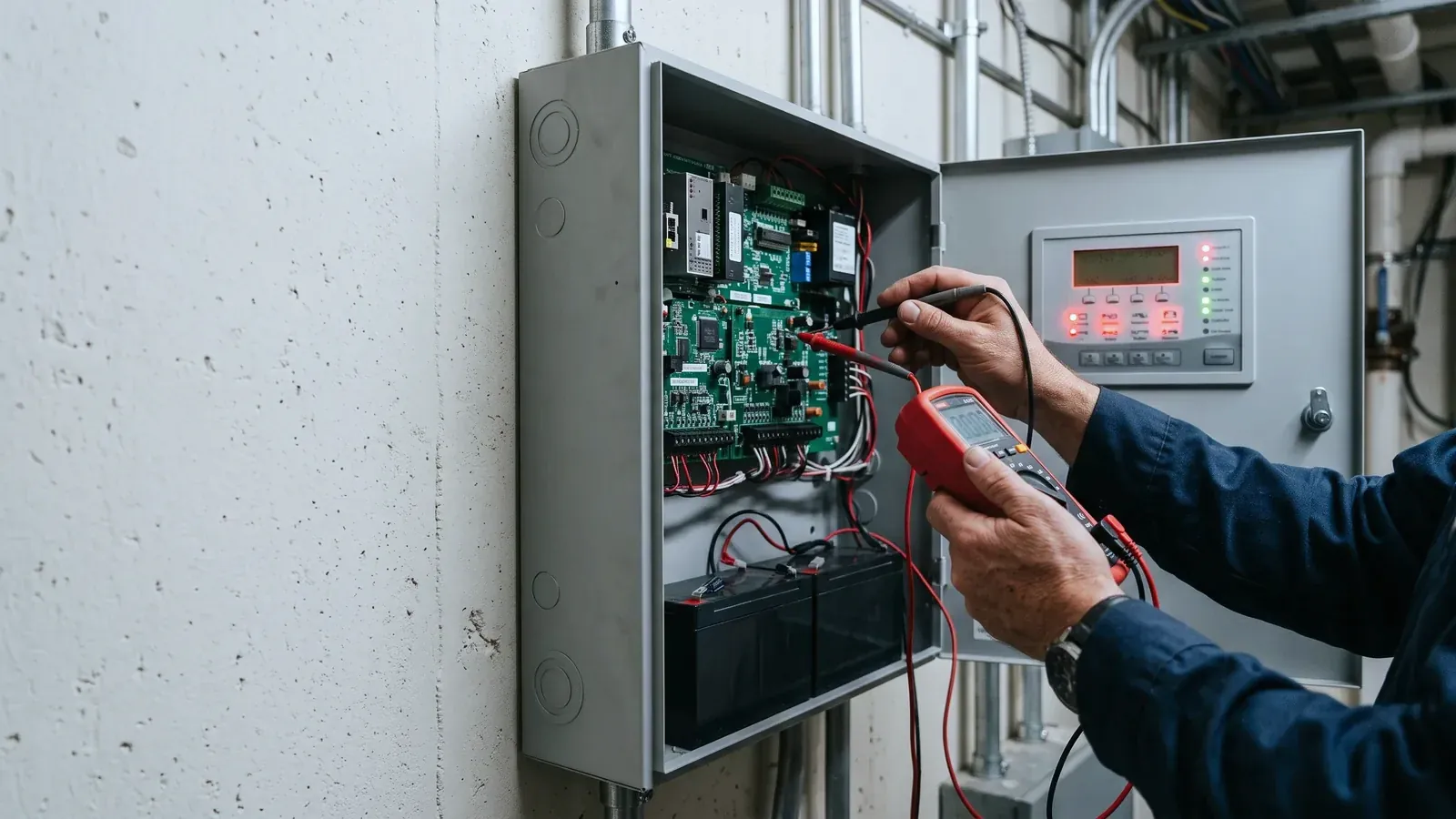
Who enforces New Jersey's fire code?
The Division of Fire Safety, which sits inside the Department of Community Affairs, writes and enforces the State Uniform Fire Code. That enforcement work falls to its Bureau of Fire Code Enforcement. The bureau also operates the Fire Solutions portal, where registrations, permits, and smoke certificates are processed.
Fire sprinkler companies in New Jersey
Any company servicing your sprinkler system needs certification from the state under N.J.A.C. 5:74. NICET, a national certification program, examines technicians who work with fire protection systems. To qualify, a fire sprinkler system contractor needs NICET Level II certification for inspecting and testing water-based systems, plus a pass on NICET's Water-Based Layout Level I exam.
New Jersey publishes two forms for this work (one for quarterly sprinkler inspections and one for annual inspections) on its contractor forms page. The Contractor Certification Unit also keeps a public list of contractor businesses permitted to work on fire protection equipment. Need your sprinklers inspected? Call now to book a certified New Jersey contractor from the state's permitted list.
Fire extinguisher service in New Jersey
Any portable fire extinguisher contractor has to pass the ICC/NAFED exam for certified portable fire extinguisher technicians. Kitchen hood work is a separate trade, and those contractors take ICC/NAFED's exam for pre-engineered kitchen fire extinguishing systems technicians.
Each contractor type carries its own qualification, so match the contractor to the equipment you own.
| Contractor | State requirement |
|---|---|
| Portable fire extinguisher | Pass the ICC/NAFED exam for Certified Portable Fire Extinguisher Technicians |
| Kitchen fire suppression | Pass the ICC/NAFED exam for Pre-Engineered Kitchen Fire Extinguishing Systems Technicians |
| Fire sprinkler system | NICET Level II in Water-Based Systems Inspection and Testing, and the Water-Based Layout Level I exam |
| Special hazards | NICET Level II in Special Hazards Suppression Systems |
| Fire alarms | NICET Level II in Fire Alarm Systems, or a state fire alarm business license, or electrical contractor status |
| All fire protection equipment | Level II NICET across fire alarms, water-based system inspection and testing, and special hazards, with the Water-Based Layout Level I exam, plus both ICC/NAFED exams |
Need extinguisher or kitchen fire suppression service? Call now to book a qualified contractor for the equipment you have.
Fire alarm licenses in New Jersey
Signed in 1998, Public Law 1997, c.305 requires a license for any work installing, servicing, or maintaining fire alarms, burglar alarms, and electronic security systems. Applicants have to be 18 or older, pass an exam, and submit fingerprints for a criminal history check. A company selling alarm services needs a business license too, with one licensed individual listed as its business qualifier, the person answerable for that license.
Alarm license holders must earn 24 continuing education credits per license within each three-year period, due by August 31 ahead of the renewal year. Renewing during the 30-day late window adds a $50 fee. Miss that window and the license gets suspended automatically, which means an alarm company whose license has lapsed is not permitted to service your equipment. Before you book alarm work, ask to see the company's current license so a suspended company never touches your system.