
Pennsylvania fire code
Pennsylvania's fire code is built on the 2021 International Fire Code, with amendments, and it became effective at the start of 2026 as part of the state's Uniform Construction Code. Philadelphia has its own fire code. Own or manage a building? Call us now to find out which fire code requirements may apply to your property.
Code in force: 2021 IFC with state amendments. Enforced by: Department of Labor and Industry or municipalities. Your local fire marshal can add rules, so check with that office too.
- statewide reference code under the construction code 2021 IFC with amendments
- effective date for the state triennial update January 1, 2026
- enforces commercial code in opted-out municipalities Department of Labor and Industry
- local code enforced by licenses and inspections Philadelphia Fire Code
Asking about a house? For a house or duplex, smoke alarm and sprinkler rules usually come from the residential building code (the IRC) instead, so ask your local building department.
How the statewide code works
Pennsylvania's statewide building code is called the Uniform Construction Code. Per 34 Pa. Code 403.21, the International Fire Code applies only where the other adopted building codes point to it.
The Department of Labor and Industry reports that more than 90% of the state's 2,562 municipalities administer and enforce the code themselves. When a municipality has opted out, the department takes care of all commercial code enforcement there. It is also the only authority for every elevator and every state-owned building.
Approval for the most recent update came on October 16, 2025, and it became effective January 1, 2026. It points to the 2021 International Fire Code with amendments. Before that, the code relied on the 2009 edition along with portions of 2015, which had been in force since April 16, 2016.
Philadelphia fire code
In Philadelphia, building owners must have their fire protection systems checked and approved by properly qualified tradespeople. Homes with one or two families don't have to. Who is allowed to perform the work is spelled out in the city's certification rules:
- Fire alarms: either a fire alarm inspector or an electrical contractor may handle these.
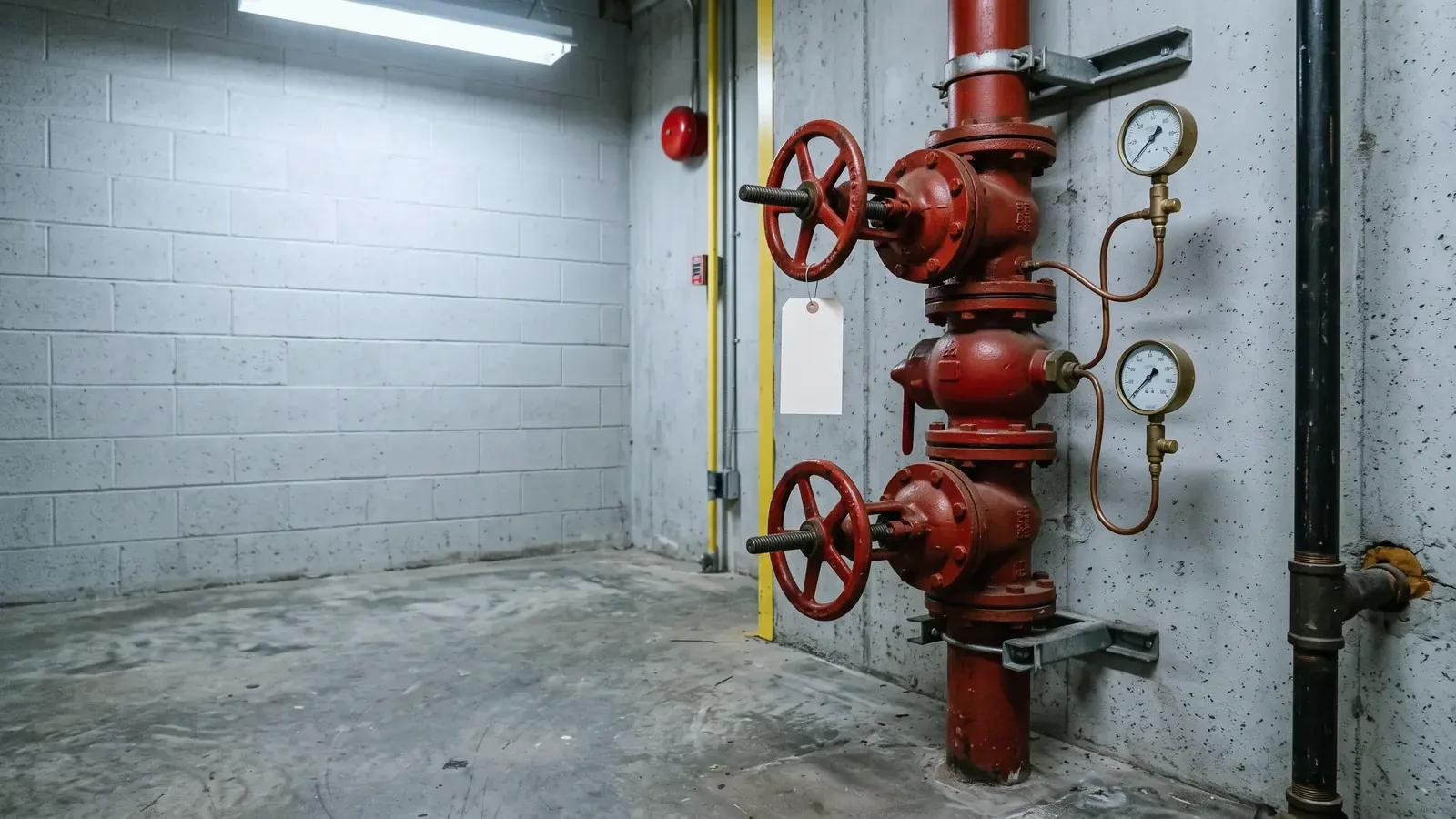
- Sprinklers and standpipes: these require a fire suppression system worker holding a specialty license and working for a fire suppression system contractor.
- Smoke control: this work goes to a Sheet Metal Systems Technician who is certified by the city and works for a licensed contractor.
The inspector gives you the certification and sends a copy to L&I, the city's Department of Licenses and Inspections. The contractor files it online through the city's eCLIPSE system. A standpipe is simply a pipe that moves water up to the higher floors so firefighters can use it.
Philadelphia follows national safety standards for keeping sprinklers and fire alarms in working order. Weekly smoke alarm testing is required, and any alarm that fails has to be replaced within 3 days of written notice. Philadelphia requires fire alarm monitoring in buildings constructed on or after January 1, 2004, as well as certain older high-rises and Group I and H buildings.
Wondering what applies to your building? A contractor can walk you through it if you call now.
Inspection and repair deadlines in Philadelphia
The inspection schedule and the repair window both vary by system.
| System | Inspection frequency | Repair window |
|---|---|---|
| Sprinkler, special hazard, fire alarm | Certified once a year | 45 days |
| Smoke control | Yearly | 90 days |
| Dampers | On a 4-year cycle | 90 days |
| Hospital and I-2 building dampers | On a 6-year cycle | 90 days |
Think of a damper as a small flap inside the ductwork that shuts to keep fire and smoke from spreading. If problems remain uncorrected after 45 days for sprinkler, special hazard, or fire alarm systems, or 90 days for smoke control systems or dampers, a deficiency notice follows. The contractor also has to give L&I a list of any problems left uncorrected.
When a system is out of service
Any time a required system gets shut off, notify the fire department immediately. The system must also carry an impairment tag, a label marking it as not in service.
While the system is down, a fire watch may be required. In practice, that means someone patrols the building every 30 minutes, and in a multi-story building you need at least one person per 5 floors.
Appealing a Philadelphia fire violation
If L&I cites you for a fire code violation, you can file an appeal with the Board of Safety and Fire Prevention. You have 30 days from the date on the violation notice to file. The cost is $150 per building, and filing online through eCLIPSE is an option.
Before the appeal can be considered, an assigned fire code inspector has to inspect the property. A recommendation comes from the board, while the fire commissioner makes the final decision.
Requesting a variance is another option; in other words, asking for an exception to the Philadelphia Fire Code. When there's no violation notice, use Permission Request.
With a 30-day clock running, call now and have a contractor review the violation alongside you.
Checking your contractor's license in Philadelphia
The Fire Suppression Systems Worker license comes from L&I, and anyone who installs, tests, maintains, or inspects fire suppression systems must hold one. Anyone holding it must be employed by a contractor, since it doesn't authorize them to operate a business of their own.
Before any work begins, ask your contractor to show their Philadelphia license and the specialty license held by the technician. Once the job is done, confirm you get your certification and hold on to a copy.
Not sure your last inspection is still current? Call now, and a licensed contractor can check it before a deficiency notice arrives.