
South Carolina fire code
Across the state, the rulebook in force is the 2021 South Carolina Fire Code, in effect locally since the start of 2023. Building owners and managers should know that the fire code and separate state licensing rules may both matter when fire protection equipment needs work. Call us today and we'll walk you through what to ask your contractors for before work begins.
Code in force: 2021 IFC with SC modifications. Enforced by: Office of State Fire Marshal. Your local fire marshal can add rules, so check with that office too.
- mandatory statewide fire code edition 2021 SC Fire Code
- local implementation date set by state council January 1, 2023
- agency for extinguisher firm licenses and permits Office of State Fire Marshal
- board issuing fire sprinkler contractor licenses Contractors' Licensing Board
Asking about a house? For a house or duplex, smoke alarm and sprinkler rules usually come from the residential building code (the IRC) instead, so ask your local building department.
What the 2021 code requires
Built on the 2021 International Fire Code, the state version includes amendments specific to South Carolina and contains a dedicated chapter covering the standards it references. The SC Building Codes Council chose January 1, 2023 as the day cities and counties started enforcing it.
State law requires every county and city to enforce South Carolina's statewide changes to the building code, so the same changes apply wherever your property is.
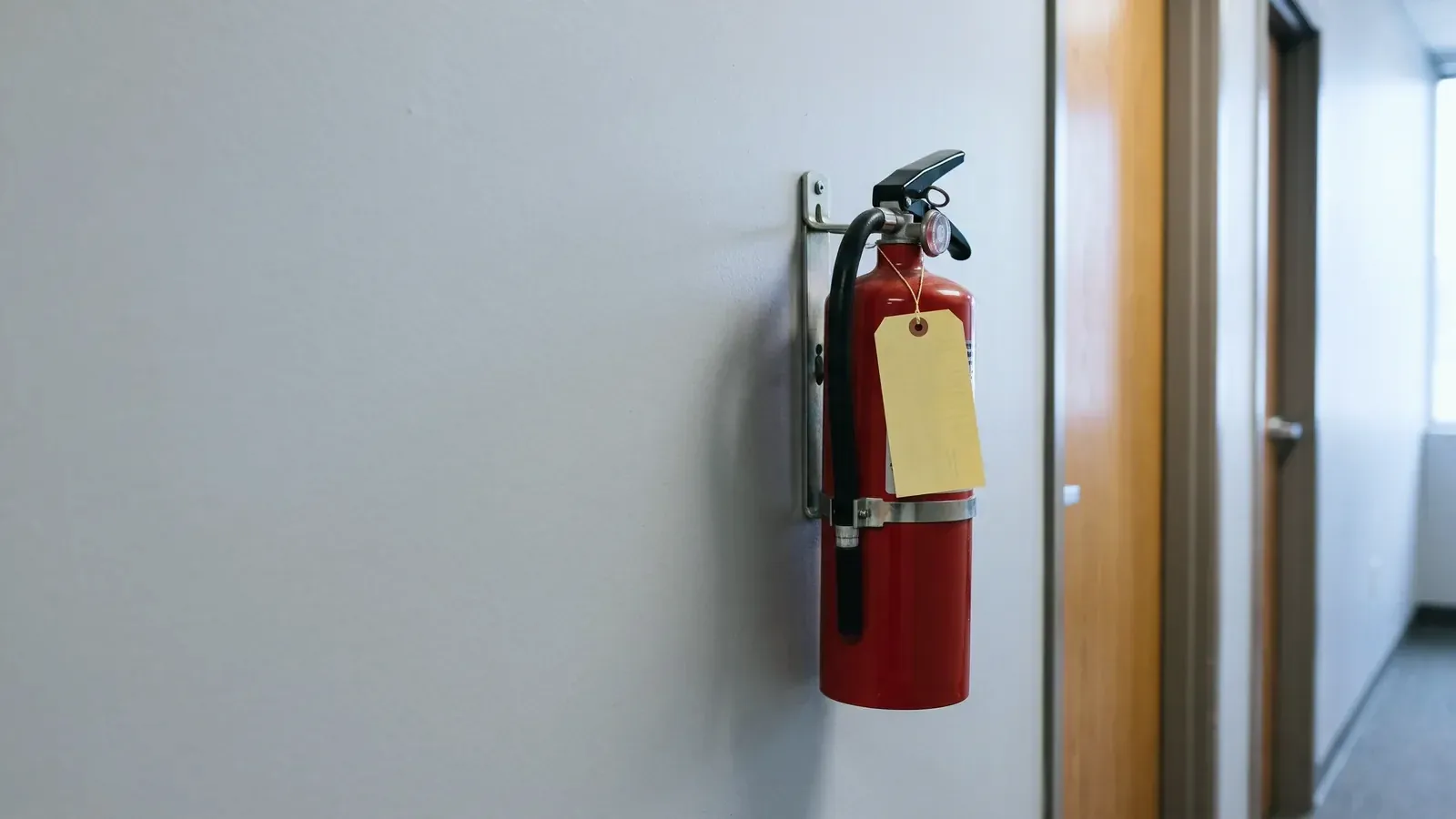
Fire marshal licenses and permits in South Carolina
The OSFM, which is the State Fire Marshal's office, issues licenses to companies that service portable fire extinguishers. It licenses businesses that install, test, or maintain fixed extinguishing systems too, meaning permanent systems designed to suppress fire within a room or area. Companies that work on fixed systems need a Class D license.
Every technician must hold an individual OSFM permit as well. To qualify, an applicant needs to be 18 or older and pass a written test covering codes, state statutes, and regulations. Fail the exam and you get one retest after 7 days; after that, the wait is 6 months. A trainee may carry a Class E apprentice permit for one year only, and renewal is not allowed.
Any company holding a Class A, B, or C license needs public liability insurance of $1,000,000 or more. OSFM fees cannot be refunded, and each violation can bring a citation of up to $2,000.
Any tamper seal placed on a serviced extinguisher must carry an imprinted year. Handwritten dates won't count, so look at the seal whenever service is done. Read the full rules.
South Carolina fire sprinkler license rules
The SC Contractors' Licensing Board handles sprinkler licensing under the Fire Protection Sprinkler Systems Act. Working on sprinklers without a license breaks the law. It's treated as a misdemeanor, and the consequences can include jail for as long as twelve months or a fine reaching $5,000.
Every sprinkler contractor has to have a primary qualifying party on staff. That's the full-time employee whose certification supports the business license, and that person must carry NICET Level III or IV certification for automatic sprinkler system layout.
| Item | What's required |
|---|---|
| First application | Form Doc #145 |
| License cost | $200, covering one qualifying party |
| Added qualifying party | $50 each |
| General liability insurance | $100,000 minimum |
| Certificate holder | SC Contractors' Licensing Board |
| Insurance company | Must be licensed in South Carolina |
A separate license and a separate full-time qualifying party are required for each main or branch office. The application details spell out what insurance and certificate documentation you need.
Licenses run out on the last day of July. Miss renewal by more than 120 days and renewal is off the table, so you'd have to file a brand-new application.
When a qualifying party departs, the licensee has 15 days to inform the department. From that point, the license remains valid for 6 months. Any other changes to what was filed originally must be reported in 15 days as well.
Certain plumbing contractors doing standpipe work (the pipes firefighters connect hoses to) need drawings for the job that the State Fire Marshal's Office has signed off on. That work has to comply with NFPA 14, which is the standpipe standard. Not sure what to ask your contractor for? Call before any work starts, and a contractor can take you through it.
Checking your contractors before work starts
Before you hire a sprinkler company, request its Contractors' Licensing Board license, proof of insurance, and the NICET Level III or IV certificate held by its qualifying party.
When it comes to extinguishers, ask to see the company's OSFM license plus the technician's permit. Afterward, confirm the fresh tamper seal shows an imprinted year.