
Utah fire code
For commercial buildings, Utah uses the International Fire Code, 2024 Edition, along with Utah's own amendments. According to the Utah State Fire Marshal's Office, these code books take effect July 1, 2026. If the alarms, sprinklers, extinguishers, or kitchen hood in your building are coming due for service, call now to have them looked at ahead of that date.
Code in force: 2024 IFC with Utah amendments. Enforced by: Utah State Fire Marshal's Office. Your local fire marshal can add rules, so check with that office too.
- adopted state fire code IFC 2024 Edition
- effective date for 2024 code books July 1, 2026
- state office that oversees fire rules Utah State Fire Marshal
- state rule and statute for fire code R710-9 and 15A-5-207
Asking about a house? For a house or duplex, smoke alarm and sprinkler rules usually come from the residential building code (the IRC) instead, so ask your local building department.
Rules your fire systems have to meet
Every fire safety system in your building has its own standard to follow. NFPA, the National Fire Protection Association, writes most of these. It is a national organization that publishes detailed rules on how fire systems get built and maintained. Utah layers its own rule numbers on top of those. Every edition shown in this table comes from the State Fire Marshal.
| Fire system | Standard applied in Utah | Utah rule number |
|---|---|---|
| Fire sprinklers | NFPA 13, 13D, 13R, 15, 20, and 24, 2022 editions | R710-4 and R710-5 |
| Inspection and testing of sprinklers | NFPA 25 (2023) | R710-4 and R710-5 |
| Fire alarms | NFPA 72, 2022 edition | R710-11 |
| Portable extinguishers | NFPA 10, 2022 edition | R710-1 |
| Kitchen suppression and exhaust | NFPA 96 (2024) together with NFPA 17A (2021) | R710-7 |
A system installed years ago may not meet a newer edition, and a licensed contractor can visit and tell you exactly where yours stands.
Inspections your building needs
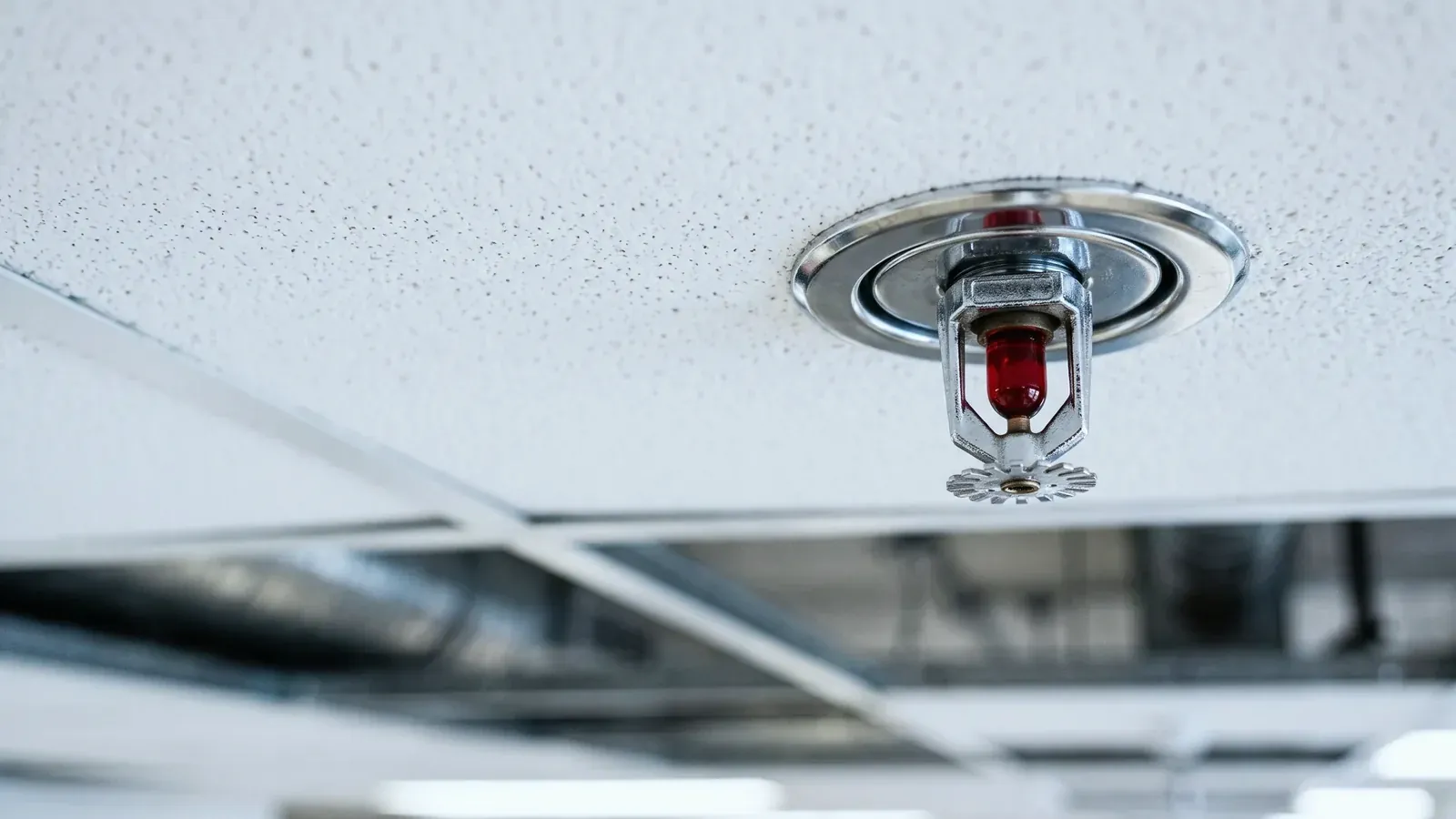
Per the Draper Fire Marshal's office, fire alarms and fire sprinklers each require an inspection once a year. Commercial kitchens run on a tighter timeline. The hood must be checked at least every 6 months by a Utah State certified inspector, and the ducts must be cleaned on the same schedule by a certified hood cleaner.
Rechargeable extinguishers have to be refilled by a fire extinguisher company certified by the state of Utah. One recharge usually runs $15 to $25.
The local fire department also inspects some properties every year. In some places this happens through a self-inspection form, and in others through an in-person visit. A skipped hood cleaning or a late sprinkler test is simpler to handle before that visit happens, so call now to schedule yours.
Who may service your fire systems?
Utah law says only licensed companies and registered technicians may do these jobs. The Office of the State Fire Marshal handles licensing for companies and technicians working on alarms, sprinklers, extinguishers, suppression systems, and the cleaning of kitchen exhaust ducts. To test for any of these licenses, a person must pass a background check and be employed by a licensed company.
A certificate of registration is required for technicians. It is a personal license from the State Fire Marshal's Office that authorizes them to do the work. The sprinkler inspection and testing program began in March 2004. It runs across 4 levels, starting at Technician I and going up to Master Technician. Moving through each level means passing exams and finishing a hands-on skills task book, and the technician also has to show evidence of public liability coverage.
Extinguisher service companies renew their license annually. They have to hold public liability insurance of $100,000 or more per incident, with $300,000 in total coverage. Their technicians must score 70 percent or higher on a written exam and retake it at 5-year intervals.
Can a Utah city set stricter fire rules?
No. How codes get adopted across Utah is governed by Title 15A, known as the State Construction and Fire Codes Act. The International Code Council notes that under this law, cities and counties cannot impose requirements that go beyond the state construction code.
One local option does exist. By ordinance, a city may take up the Utah Wildland Urban Interface Code. That code draws on the 2006 international code written for buildings in wildfire-prone areas.
City rules in Salt Lake City and Draper
Cities still enforce the code and run their own permits. Permits for hazardous activities are required by the Salt Lake City Fire Prevention Bureau. Its headquarters sits at 475 S 300 E. A fire watch is also required by the city whenever a commercial building has a problem with its fire suppression system. During a fire watch, people walk through the building watching for fire while the system is out of service.
Draper requires a Temporary Commercial Business License for anyone selling fireworks. Burning leaves and yard waste is prohibited in Draper and everywhere else in Salt Lake County. A recreational fire can be no bigger than 3 feet across and 2 feet high, and it must stay at least 25 feet away from any building.
A fire watch costs money for every day it runs when your sprinkler or suppression system goes down. Call now to have the system repaired and back in service.