
Vermont fire code
Vermont's current fire rulebook is the state's 2025 Fire and Building Safety Code, and it brings in NFPA 1 and NFPA 101 in their 2021 editions. The code changed in November 2025, so if you're not sure which rules apply to your building or whether your fire alarm inspector holds the right certification, call now and we'll help you work out your next step.
Code in force: NFPA 1 and NFPA 101, 2021 editions. Enforced by: Vermont Division of Fire Safety. Your local fire marshal can add rules, so check with that office too.
- primary fire and life safety codes NFPA 1 and 101, 2021
- vermont fire and building safety code edition 2025 state code rule
- state office that amends and enforces codes Division of Fire Safety
- required credential for system inspectors Certification of Fitness (TQP)
Asking about a house? For a house or duplex, smoke alarm and sprinkler rules usually come from the residential building code (the IRC) instead, so ask your local building department.
Codes in use across Vermont
Vermont starts with national safety standards, adopts them by regulation, and the Division of Fire Safety changes them where needed to suit conditions in Vermont. This has been the practice since 1972. Enforcement falls to the Vermont State Fire Marshal's Office.
The previous 2015 state code, which relied on NFPA 1 and NFPA 101 in their 2015 versions, applied from 10/10/16 until 11/05/25. The 2025 rule has now taken its place.
| Code | Version in use in Vermont |
|---|---|
| Fire Code (NFPA 1) | 2021 edition |
| Life Safety Code (NFPA 101) | 2021 edition |
| International Building Code | 2021 edition |
| National Electrical Code (NFPA 70) | 2023 edition |
The Division of Fire Safety does not sell code books. Vermont's own amendments are posted on the Division of Fire Safety's codes page. If you're unsure how a Vermont amendment affects your building, call now and we'll help you make sense of it.
Standards for alarms and suppression systems
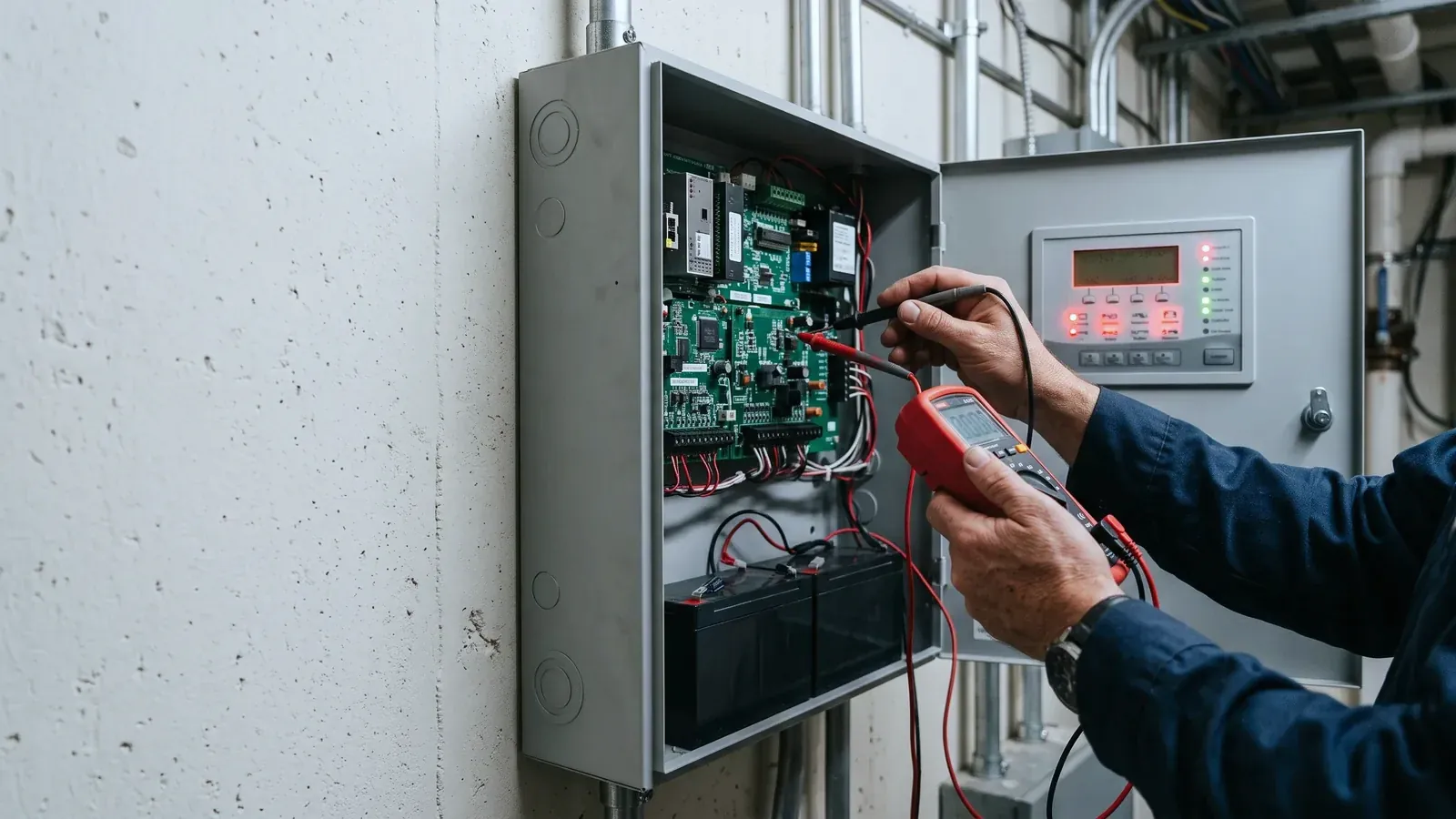
NFPA 72, the National Fire Alarm Code, governs fire alarm and detection systems. In dwelling units, carbon monoxide warning equipment follows NFPA 720.
Certain spaces rely on chemical suppression rather than water. NFPA 17 covers dry chemical extinguishing systems, while NFPA 2001 covers clean agent systems. For each, Vermont applies its current adopted edition.
Vermont fire alarm license
People who inspect and test fire alarm and detection equipment in Vermont must hold a Certification of Fitness, which Vermont calls a TQP. The state's T1 fire alarm page explains who qualifies.
To get the T1 fire alarm certification, you need to be a Master Electrician, a Journeyman Electrician, or a G7(c) Type S Journeyman Electrician.
Electricians who work on commercial fire alarms need a special state license for that work, so it's worth checking before anyone starts on your system.
Chemical suppression carries its own TQP. It applies to people who design, install, inspect, service, or recharge fixed fire protection systems that don't use water. They need a current NICET or NAFED certification to get the certificate and to renew it, and a copy goes in with each renewal. Full details are on the chemical suppression page. Planning work on a chemical suppression system? Call now before it begins so you know which certifications the work requires.
Confirming who may work on your system
Licensing and certification for these trades run through the Division of Fire Safety. Continuing education is part of most programs.
Vermont keeps a master list of everyone holding a license or certification, plus a list of approved continuing education providers. Before a contractor begins work, you can verify them there.
A web portal handles some applications and renewals online. For the rest, PDF forms get mailed in along with payment.