
Wyoming fire code
Wyoming uses the 2024 International Fire Code for new state plan reviews, and many commercial building plans must get state approval before construction begins. Not sure whether your project needs state plan review? Call now to talk through the requirements before work begins.
Code in force: 2024 International Fire Code. Enforced by: Wyoming State Fire Marshal's Office. Your local fire marshal can add rules, so check with that office too.
- code required for new state plan reviews 2024 International Fire Code
- start date for 2024 code plan submittals June 28, 2024
- state agency that reviews building plans State Fire Marshal's Office
- required for alarm work under 90 volts LV-A alarm license
Asking about a house? For a house or duplex, smoke alarm and sprinkler rules usually come from the residential building code (the IRC) instead, so ask your local building department.
State fire marshal of Wyoming
The Wyoming State Fire Marshal's Office works to safeguard lives and property against fire and electrical dangers. Through W.S. 35-9-106, it establishes baseline fire and electrical safety standards covering both new and existing buildings. These standards may not exceed the National Electrical Code or the International Codes.
Some cities and counties enforce the state codes themselves, with permission from the State Fire Marshal. So it's worth checking with your local fire department too. Other state departments in Wyoming may adopt codes too, within whatever area they oversee.
Code adoptions are posted on the State Fire Marshal's plan review page.
Plan review by the Wyoming fire marshal
Per W.S. 35-9-108, certain buildings and projects require a state plan review. During a plan review, the state compares your drawings to the fire code ahead of construction. Applications go through the State Fire Marshal's online portal, which also handles licenses, permits, and fees.
| Project type | Review trigger |
|---|---|
| Public-access building, like a shop or office | More than 5,000 sq ft |
| Places where people gather, like a hall or church | No size minimum |
| Changes to a covered building | Work valued at $40,000 or more |
| Alarm, sprinkler, or suppression systems | All new installs, additions, and changes, at any size |
| Type I kitchen exhaust hoods (commercial) | Every installation |
The plans need sign-off from Wyoming's Department of Fire Prevention and Electrical Safety, and that approval must be in hand before work begins. Wondering which category your project belongs in? Call now and we'll help you figure it out before you file.
Electrical and alarm licensing
The National Electrical Code is adopted in Wyoming with no changes. Anyone performing low voltage work has to work for a licensed Wyoming Low Voltage/Limited Contractor. Getting a low voltage alarm technician license takes 3,000 hours of experience.
If you're an electrician, the state licensing page lists what the journeyman license takes:
- Work experience to take the exam: 8,000 hours
- License fee after you pass: $100.00
- Renewal: every 3 years, $50.00
- Training hours before renewal: 16 total, with at least 8 on the National Electrical Code
- Card payment fee: 2.5%, $1.00 minimum
W.S. 35-9-130 lays out the penalties for doing electrical work without a license.
Local rules in Cheyenne
Cheyenne Fire Rescue has used The Compliance Engine for inspection reports from outside companies since July 2023. This links your inspecting contractor straight to the local fire department.
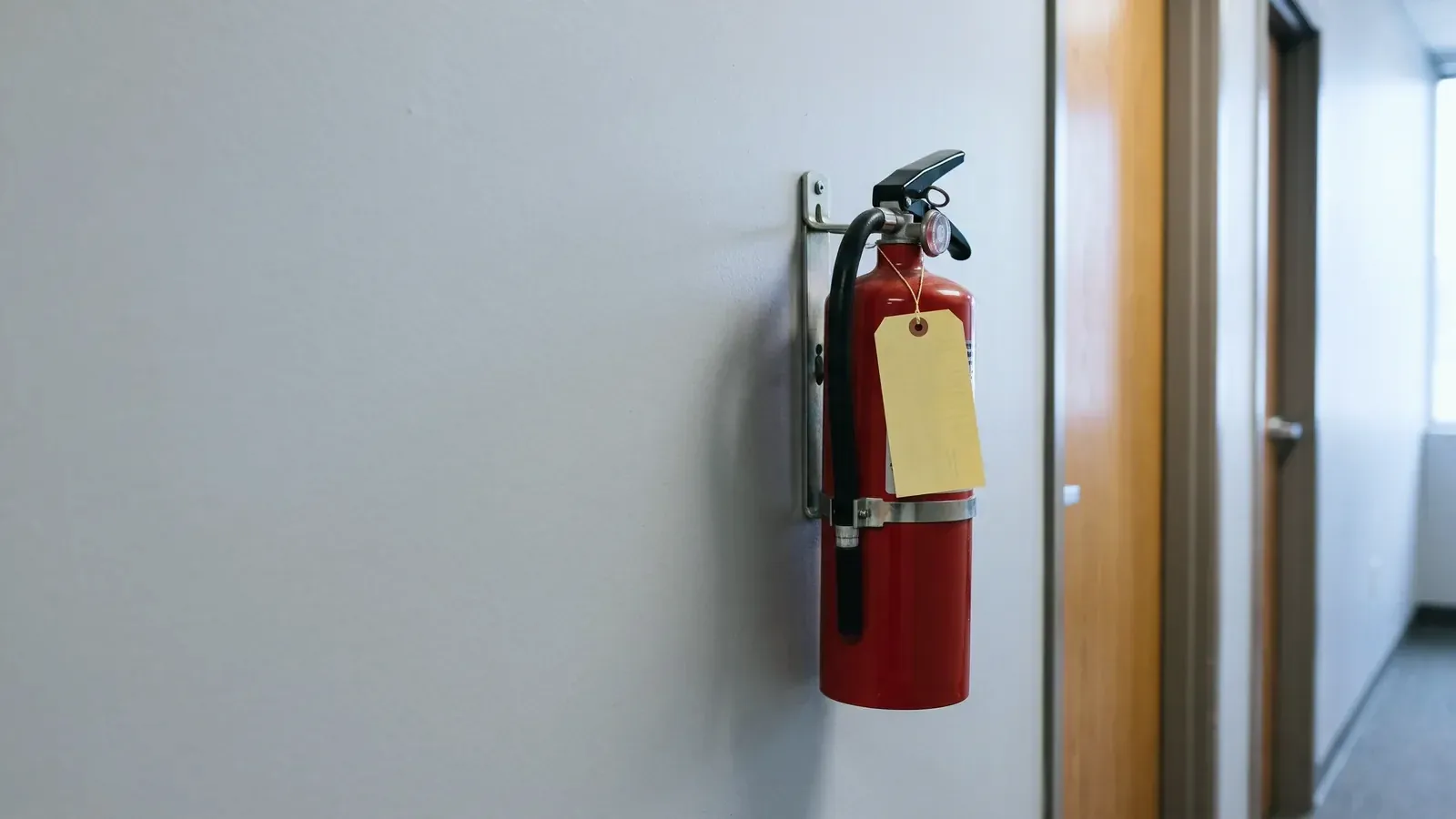
Extinguishers and kitchen hood systems must be inspected, serviced and certified by qualified professionals. Cheyenne Fire Rescue publishes a list of companies that tag and certify extinguishers.
During a fire watch, a person walks the building while a system is out of service. It calls for a thorough patrol log, records of hazards and fast communication with emergency services. The watch continues until every system is back in working order.
Campbell County rules
Campbell County Fire Department follows plan review checklists issued by the State Fire Marshal's office. Submittals that aren't complete won't be reviewed, and you'll have to send them in again.
Fire inspections should be scheduled with 48 hours of notice. A fire permit is required for temporary tents over 400 square feet. Under state statute, the department holds no jurisdiction over mine sites or oil and gas sites.
An incomplete submittal gets sent back, and every resubmittal costs you time. Call now and we'll help you get your plans complete the first time.